Z-138 Xenograft Model Overview
The Z-138 xenograft model is derived from a mantle cell lymphoma (MCL) cell line established from the peripheral blood of a patient with leukemic-phase MCL. It is considered a classical MCL model, representing the cyclin D1-positive, t(11;14)(q13;q32) translocation-driven subtype. Z-138 cells exhibit hallmark genetic and phenotypic features of MCL, including mature B-cell surface markers and constitutive B-cell receptor (BCR) and NF-κB pathway activation. When implanted into immunodeficient mice, Z-138 cells reliably generate subcutaneous tumors with consistent kinetics and histopathologic fidelity, making this model a widely utilized platform for evaluating therapeutic agents targeting MCL-related signaling, apoptosis, and immune evasion.
Request a Custom Quote for Z‑138 Xenograft ModelBiological and Molecular Characteristics
Z-138 cells harbor the canonical t(11;14)(q13;q32) translocation, resulting in CCND1 overexpression and dysregulated cell cycle progression. The immunophenotype is typical of MCL, including CD19, CD20, CD5 positivity and surface immunoglobulin expression. Importantly, Z-138 cells are wild-type for TP53 but show high expression of BCL2 and intermediate expression of MCL1, positioning them as a responsive system for testing apoptosis-modulating therapies. The NF-κB pathway is constitutively active, contributing to the anti-apoptotic and proliferative phenotype. Z-138 also retains surface MHC class I and II expression, which allows for studies involving immune recognition and modulation.
| Characteristic | Description |
|---|---|
| Tissue Origin | Human mantle cell lymphoma (leukemic phase) |
| Key Alterations | t(11;14)(q13;q32) cyclin D1 overexpression |
| Immunophenotype | CD19+, CD20+, CD5+, sIg+, MHC I/II+ |
| Mutation Status | TP53 wild-type, NF-κB pathway active |
| Therapeutic Relevance | BCL2 inhibition, CDK4/6 targeting, BTK and PI3K inhibition |
In Vivo Model Development and Tumorigenicity
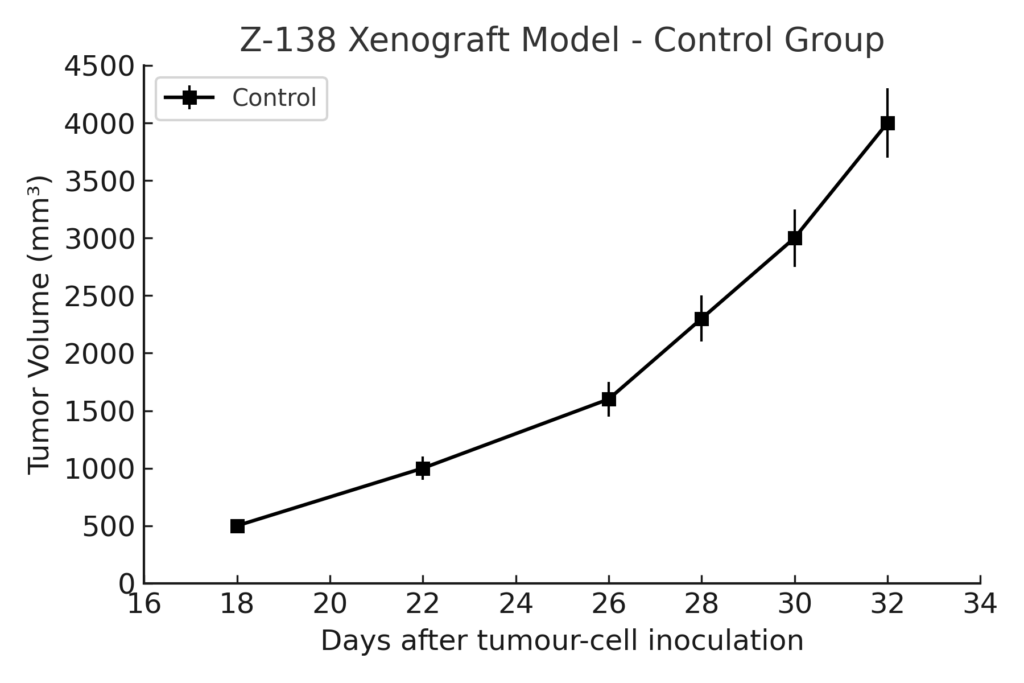
The Z-138 xenograft model is established by subcutaneous injection into immunodeficient mouse strains such as NOD/SCID or NSG. Tumors typically become palpable within 3 to 4 weeks and reach volumes of 500–700 mm³ in approximately 6–8 weeks. The tumor take rate is high, and the growth kinetics are reproducible across experimental cohorts. Z-138 xenografts are moderately vascularized and show limited necrosis, providing a reliable window for pharmacologic studies. This model is highly responsive to agents targeting the BCR signaling cascade, cyclin D1-dependent proliferation, and anti-apoptotic proteins, including emerging dual inhibitors and combination regimens.
Request a Custom Quote for Z‑138 Xenograft ModelHistopathology and Immunohistochemical Profile
Histological sections of Z-138 xenografts reveal dense sheets of small to medium-sized lymphoid cells with irregular nuclear contours, fine chromatin, and scant cytoplasm. Hematoxylin and eosin staining shows a diffuse growth pattern with a moderate mitotic rate. Immunohistochemistry confirms strong nuclear cyclin D1 staining, robust membranous CD20 expression, and high BCL2 positivity. MHC class II molecules and HLA-DR remain expressed, allowing the model to be applied to studies of immunologic targeting. Ki-67 proliferation indices are moderate to high, typically ranging from 40% to 60%, consistent with the model’s in vivo growth characteristics.
Preclinical Applications and Drug Response
The Z-138 model is an established system for evaluating therapeutic approaches in MCL. It has demonstrated consistent responsiveness to CDK4/6 inhibitors, particularly those that disrupt cyclin D1–CDK4–Rb signaling. The model is also responsive to BTK inhibitors such as ibrutinib, and BCL2 antagonists like venetoclax, reflecting its pro-survival signaling profile. PI3K and SYK pathway inhibitors have also been tested successfully in Z-138 xenografts. Due to preserved MHC expression and immune-relevant antigens, the model is adaptable to immunotherapy studies, including bispecific antibodies and antibody-drug conjugates. Its reproducibility and clinical relevance make it a valuable tool for MCL drug discovery and mechanistic evaluation.
Request This Model
To request the Z-138 xenograft model for your preclinical studies, please use the form below. A customized quote and additional model specifications will be provided upon inquiry.
Request a Custom Quote for Z‑138 Xenograft Model