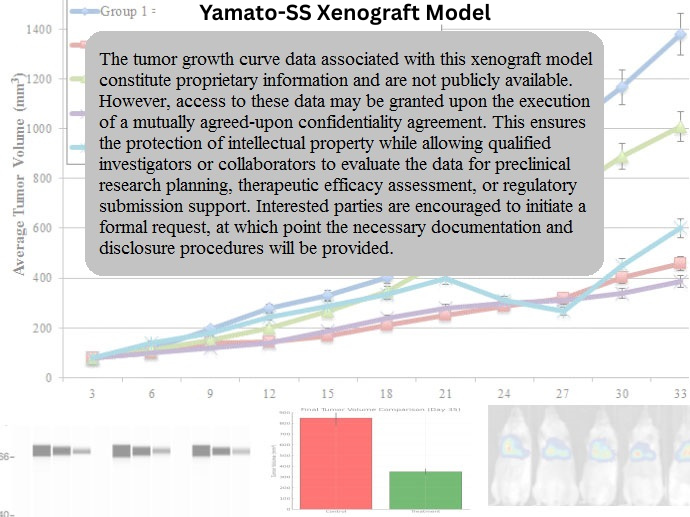
Yamato-SS Xenograft Model Overview
The Yamato-SS xenograft model is derived from a human synovial sarcoma (SS) cell line, Yamato-SS, established from a primary synovial sarcoma tumor in a patient. Synovial sarcoma is a rare, aggressive soft tissue sarcoma, predominantly affecting adolescents and young adults. It is characterized by its high metastatic potential, particularly to the lungs and lymph nodes, and its tendency to recur after surgical resection. The Yamato-SS xenograft model is an essential preclinical tool for studying the biology of synovial sarcoma, its metastasis, and resistance to chemotherapy. The model is widely used to evaluate novel therapeutic strategies, including chemotherapy, targeted therapies, and immunotherapies aimed at improving patient survival rates in synovial sarcoma.
Request a Custom Quote for Yamato-SS Xenograft ModelBiological and Molecular Characteristics
Yamato-SS cells are characterized by their mesenchymal origin and are known for their expression of both epithelial and mesenchymal markers. This biphasic pattern of differentiation is a hallmark of synovial sarcoma and contributes to the complex nature of the disease. The model is particularly relevant for studying synovial sarcoma due to the presence of the SS18-SSX fusion gene, a chromosomal translocation that results in the production of a fusion protein that plays a central role in tumorigenesis and tumor progression. The presence of the SS18-SSX fusion gene is responsible for the deregulation of transcription factors that affect the cell cycle and apoptosis, making the Yamato-SS model a valuable tool for studying synovial sarcoma’s unique molecular features. Additionally, Yamato-SS cells exhibit dysregulated signaling pathways such as PI3K/AKT, MAPK/ERK, and mTOR, which contribute to cell survival, proliferation, and metastasis.
| Marker | Expression Level | Function |
|---|---|---|
| SS18-SSX Fusion | Present | Oncogenic fusion gene driving tumorigenesis |
| Cytokeratin | High | Epithelial cell marker |
| Vimentin | High | Mesenchymal marker involved in tumor invasion |
| PI3K/AKT pathway | Dysregulated | Promotes cell survival and proliferation |
In Vivo Model Development and Tumorigenicity
The Yamato-SS xenograft model is typically established by implanting Yamato-SS cells into immunocompromised mice, such as NOD/SCID or NSG mice, which lack functional T and B cells. Once implanted, the cells form tumors that replicate the clinical features of synovial sarcoma, including high cellularity, biphasic tumor architecture (epithelial and mesenchymal components), and significant vascularization. These tumors also show areas of necrosis, indicative of rapid tumor growth. The Yamato-SS model is particularly useful for evaluating chemotherapy agents commonly used in the treatment of soft tissue sarcomas, such as doxorubicin, ifosfamide, and cisplatin.
In addition to subcutaneous implantation, orthotopic models of Yamato-SS can be established by implanting the cells into the synovial tissues or soft tissues of immunocompromised mice. This orthotopic model more accurately replicates the natural site of tumor growth and allows for the study of local invasion, metastatic spread, and the effects of treatment on the tumor microenvironment. The ability of Yamato-SS tumors to metastasize to distant organs, particularly the lungs, makes the model highly relevant for studying the metastatic behavior of synovial sarcoma and for evaluating therapies aimed at preventing or treating metastasis.
Request a Custom Quote for Yamato-SS Xenograft ModelHistopathology and Immunohistochemical Profile
Histopathological examination of Yamato-SS xenografts reveals the characteristic biphasic pattern of synovial sarcoma, with both epithelial and mesenchymal components present. The tumors exhibit glandular structures (epithelial component) and spindle cell areas (mesenchymal component), which is typical of synovial sarcoma. Immunohistochemical staining of Yamato-SS xenografts shows strong expression of epithelial markers such as cytokeratins and mesenchymal markers like vimentin, confirming the biphasic nature of the tumor. Additionally, the presence of the SS18-SSX fusion gene can be detected by specific probes, reflecting the key role of this fusion protein in the pathogenesis of synovial sarcoma. The tumors also exhibit elevated levels of phosphorylated AKT, indicating activation of the PI3K/AKT pathway, which contributes to tumor survival and resistance to chemotherapy. CD31 staining reveals significant angiogenesis within the tumors, highlighting the importance of blood vessel formation in supporting tumor growth.
Preclinical Applications and Drug Response
The Yamato-SS xenograft model is widely used to evaluate the efficacy of various therapeutic agents for synovial sarcoma. The model is particularly useful for testing chemotherapy agents such as doxorubicin, ifosfamide, and cisplatin, which are part of the standard treatment regimen for soft tissue sarcomas, including synovial sarcoma. The model’s potential for developing resistance to chemotherapy over time makes it highly valuable for studying chemotherapy resistance mechanisms and testing new agents aimed at overcoming these challenges.
The Yamato-SS xenograft model is also useful for evaluating targeted therapies, particularly those targeting the SS18-SSX fusion protein or the signaling pathways involved in synovial sarcoma pathogenesis, such as PI3K/AKT and MAPK/ERK. Additionally, the model is increasingly used to assess the potential of immunotherapies, including immune checkpoint inhibitors, which are showing promise in the treatment of other cancers and are now being explored for synovial sarcoma.
Furthermore, the ability of Yamato-SS xenografts to metastasize to distant organs, particularly the lungs, provides an excellent opportunity to evaluate therapies aimed at preventing or treating metastatic disease, which is a critical challenge in synovial sarcoma treatment.
Request This Model
To request the Yamato-SS xenograft model for your preclinical studies, please use the form below. A customized quote and additional model specifications will be provided upon inquiry.
Request a Custom Quote for Yamato-SS Xenograft Model