SU-DHL-10 Xenograft Model Overview
The SU-DHL-10 xenograft model is established from a human diffuse large B-cell lymphoma (DLBCL) of the germinal center B-cell–like (GCB) subtype. This model represents a biologically relevant and genomically distinct DLBCL line characterized by MYC overexpression, wild-type TP53, and the absence of the hallmark BCL2 translocation seen in other GCB-DLBCL models. Its unique molecular profile makes it particularly suitable for preclinical studies investigating MYC-driven oncogenesis, resistance to standard immunochemotherapy, and the efficacy of novel combination regimens targeting oncogenic transcriptional programs. When engrafted into immunodeficient mice, SU-DHL-10 produces tumors with moderate growth kinetics and highly reproducible take rates, providing a robust platform for drug evaluation.
Request a Custom Quote for SU‑DHL‑10 Xenograft ModelBiological and Molecular Characteristics
SU-DHL-10 cells possess distinct molecular features consistent with germinal center B-cell origin but diverge from typical GCB-DLBCLs due to the absence of BCL2 rearrangements and the presence of MYC amplification. These cells maintain expression of CD10, BCL6, and surface immunoglobulin, while lacking mutations in TP53, MYD88, and CD79B. MYC overexpression is a defining feature and has been associated with aggressive tumor behavior and poor prognosis in DLBCL patients. Immunophenotypically, SU-DHL-10 expresses CD19, CD20, and MHC class I/II molecules, with variable PD-L1 expression that can be modulated in vivo. The model’s transcriptional and epigenetic profile provides a valuable basis for studying MYC-driven lymphomagenesis and therapeutic response modulation.
| Characteristic | Description |
|---|---|
| Tissue Origin | Human germinal center B-cell–like DLBCL |
| Key Alterations | MYC amplification/overexpression, TP53 wild-type |
| Mutation Status | MYD88/CD79B/BCL2 wild-type |
| Immunophenotype | CD19+, CD20+, CD10+, MHC I/II+, variable PD-L1 |
| Therapeutic Relevance | MYC-driven lymphomas, CD20-targeted and transcriptional therapies |
In Vivo Model Development and Tumorigenicity
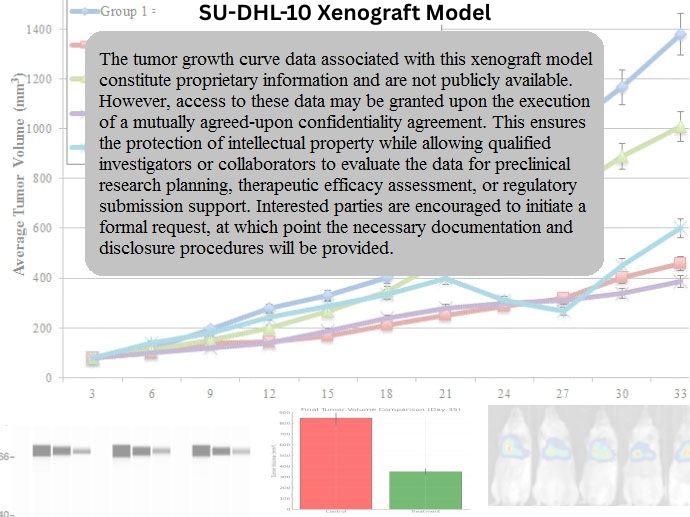
The SU-DHL-10 xenograft model is developed by subcutaneously implanting cultured cells into immunodeficient mice, typically NOD/SCID or NSG strains. Tumor formation generally occurs within three weeks post-implantation, with progressive and consistent growth reaching 400–600 mm³ in approximately five to six weeks. Tumor take rates are high, and the model supports reproducible study timelines, allowing for controlled evaluation of treatment regimens targeting MYC, apoptosis regulation, and chromatin remodeling. Given its unique MYC-driven phenotype and lack of BCL2 involvement, this model is ideal for dissecting non-canonical mechanisms of DLBCL progression and resistance.
Request a Custom Quote for SU‑DHL‑10 Xenograft ModelHistopathology and Immunohistochemical Profile
Histopathological analysis of SU-DHL-10 xenografts reveals densely packed sheets of medium to large lymphoid cells with fine chromatin, scant cytoplasm, and high mitotic activity. Hematoxylin and eosin staining shows minimal stromal infiltration and focal necrosis. Immunohistochemistry highlights strong membranous CD20 and nuclear BCL6 expression, along with intense nuclear MYC staining, confirming the model’s aggressive molecular behavior. Ki-67 proliferation indices often exceed 70%, correlating with rapid tumor expansion and high transcriptional activity. MHC class I and II expression is retained, supporting use in studies requiring intact antigen presentation or immunotherapy testing.
Preclinical Applications and Drug Response
SU-DHL-10 is a clinically relevant model for testing experimental therapies aimed at MYC-driven lymphomas, a subset known for poor responses to standard R-CHOP therapy. It has been used to assess small molecule inhibitors of MYC expression or function, such as bromodomain (BET) inhibitors and CDK9 antagonists. Due to its intact TP53, it is also suitable for combination strategies involving DNA-damaging agents or MDM2 inhibitors. The model enables testing of anti-CD20 antibodies in the context of MYC overexpression and is frequently employed in preclinical studies evaluating transcriptional reprogramming, metabolic vulnerability, and dual-target inhibition in aggressive GCB-DLBCL.
Request This Model
To request the SU-DHL-10 xenograft model for your preclinical studies, please use the form below. A customized quote and additional model specifications will be provided upon inquiry.
Request a Custom Quote for SU‑DHL‑10 Xenograft Model