SK-MEL-5 Xenograft Model Overview
The SK-MEL-5 xenograft model is derived from the SK-MEL-5 melanoma cell line, established from a lymph node metastasis of a human malignant melanoma. This model is widely employed in preclinical oncology research due to its expression of melanoma-associated antigens and responsiveness to immunotherapy and targeted treatment. SK-MEL-5 cells carry the BRAF V600E mutation, which activates the MAPK pathway, making this xenograft model highly relevant for evaluating inhibitors targeting BRAF and downstream effectors. Its consistent growth kinetics, immunogenic profile, and well-characterized molecular background support its use in a broad spectrum of translational research applications in metastatic melanoma.
Request a Custom Quote for SK‑MEL‑5 Xenograft ModelBiological and Molecular Characteristics
SK-MEL-5 cells exhibit a predominantly epithelioid morphology and demonstrate high expression of melanocyte differentiation antigens, including gp100, MART-1 (Melan-A), and tyrosinase. The presence of the BRAF V600E mutation results in constitutive activation of the MAPK/ERK pathway, promoting tumor proliferation and survival. Unlike many melanoma lines, SK-MEL-5 is also notable for its preserved expression of HLA class I molecules and its ability to present antigens to cytotoxic T lymphocytes, making it a valuable model in immunotherapy-based studies. The cell line lacks NRAS mutations and maintains functional PTEN expression, which further defines its therapeutic response landscape.
| Characteristic | Description |
|---|---|
| Tumor Origin | Human metastatic melanoma (lymph node) |
| Key Mutation | BRAF V600E |
| Antigen Expression | gp100+, MART-1+, Tyrosinase+ |
| Immunogenic Features | HLA class I+, CTL-recognized |
| Therapeutic Relevance | BRAF/MEK inhibitors, immunotherapy models |
In Vivo Model Development and Tumorigenicity
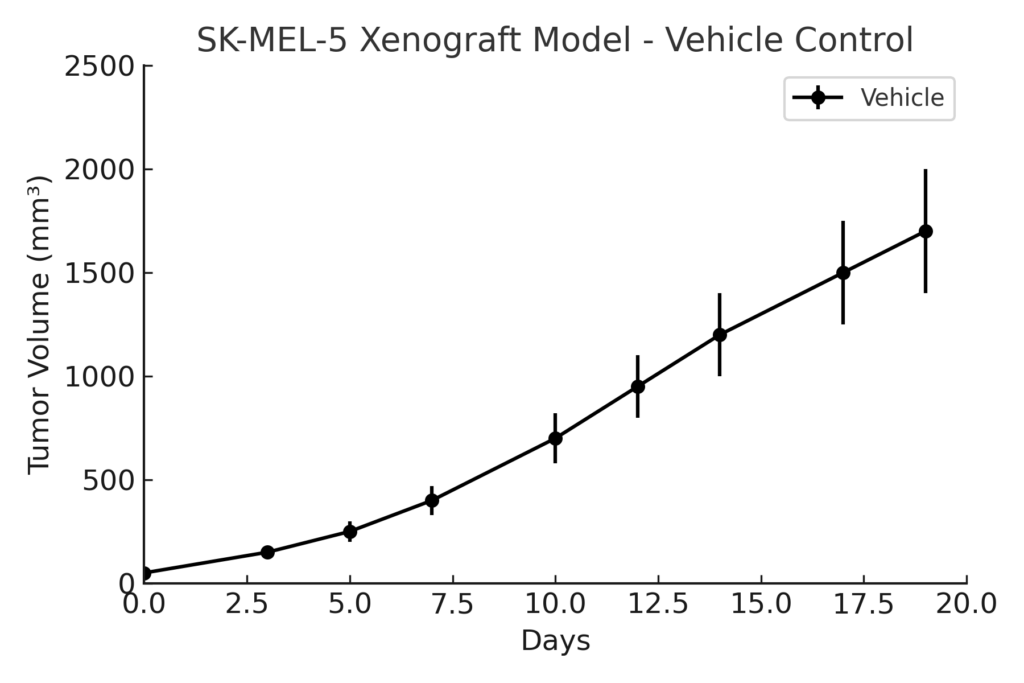
The SK-MEL-5 xenograft model is established by subcutaneous injection of tumor cells into immunodeficient mice, including NSG or athymic nude strains. Tumor engraftment occurs reliably, with visible nodules forming within 2–3 weeks. Final tumor volumes typically reach 800–900 mm³ within a 6–7 week period. The tumor growth is moderately aggressive and shows low variability between replicates, allowing for precise evaluation of therapeutic effects. SK-MEL-5 xenografts also provide an effective in vivo system for testing antigen-specific cytotoxic responses in adoptive cell therapy experiments when humanized or immune-permissive models are used.
Request a Custom Quote for SK‑MEL‑5 Xenograft ModelHistopathology and Immunohistochemical Profile
Histological analysis of SK-MEL-5 xenografts reveals a moderately pigmented tumor mass composed of epithelioid cells with prominent nucleoli and eosinophilic cytoplasm. Immunohistochemical staining confirms strong expression of melanoma lineage markers including HMB-45, Melan-A, and S100. Tumor sections also show robust positivity for BRAF V600E using mutation-specific antibodies, as well as Ki-67 staining indicating high proliferative indices (typically 60–80%). The presence of major histocompatibility complex (MHC) class I expression can be confirmed through β2-microglobulin and HLA-A/B/C staining, supporting the model’s immunological relevance.
Preclinical Applications and Drug Response
The SK-MEL-5 xenograft model is utilized extensively in the evaluation of BRAF-targeted therapies, particularly BRAF and MEK inhibitors, and their combinations with checkpoint blockade or CTL-based immunotherapies. Its preserved antigen presentation machinery and BRAF-mutated background make it an optimal system for assessing CTL-mediated killing, epitope spreading, and resistance development under therapeutic pressure. The model is also suitable for studies exploring tumor immune evasion, T-cell exhaustion, and combination strategies involving MAPK pathway inhibition and immune modulation. SK-MEL-5’s immunogenic and oncogenic profile make it a cornerstone model in translational melanoma research.
Request This Model
To request the SK‑MEL‑5 xenograft model for your preclinical studies, please use the form below. A customized quote and additional model specifications will be provided upon inquiry.
Request a Custom Quote for SK‑MEL‑5 Xenograft Model