RPMI 2650 Xenograft Model Overview
The RPMI 2650 xenograft model is derived from a human squamous cell carcinoma of the nasal septum, originally isolated from a 52-year-old Caucasian male. This model is among the few available in vivo systems representing sinonasal squamous cell carcinoma (SNSCC), a rare and aggressive malignancy of the upper respiratory tract. Due to its origin in the nasal epithelium and its conserved molecular features, the RPMI 2650 xenograft offers a valuable platform for studying sinonasal tumor biology, mucosal drug delivery, and the efficacy of chemoradiotherapy in head and neck squamous cell carcinomas. Its stable growth characteristics and histopathological fidelity make it suitable for preclinical testing of targeted and cytotoxic agents relevant to mucosal carcinomas.
Request a Custom Quote for RPMI2650 Xenograft ModelBiological and Molecular Characteristics
RPMI 2650 cells retain typical squamous epithelial features and demonstrate moderate keratinization. The model is HPV-negative and expresses wild-type p53, although p53 function may be compromised due to regulatory dysregulation. EGFR is expressed at moderate levels, and the cell line shows upregulation of cyclin D1 and alterations in p16INK4a and Rb pathways, common molecular signatures in non-HPV-related squamous carcinomas. RPMI 2650 also expresses tight junction proteins such as claudins and occludin, making it applicable in nasal mucosal permeability and drug absorption studies. The model is microsatellite stable (MSS) and does not exhibit mutations in KRAS or BRAF, maintaining a relatively unmutated genetic background suitable for mechanistic studies.
| Characteristic | RPMI 2650 Cell Line Profile |
|---|---|
| Tissue of Origin | Nasal septum squamous cell carcinoma |
| HPV Status | Negative |
| TP53 Status | Wild-type (functional compromise possible) |
| EGFR Expression | Moderate |
| MSI Status | Microsatellite stable (MSS) |
| Junctional Proteins | Claudins, Occludin |
In Vivo Model Development and Tumorigenicity
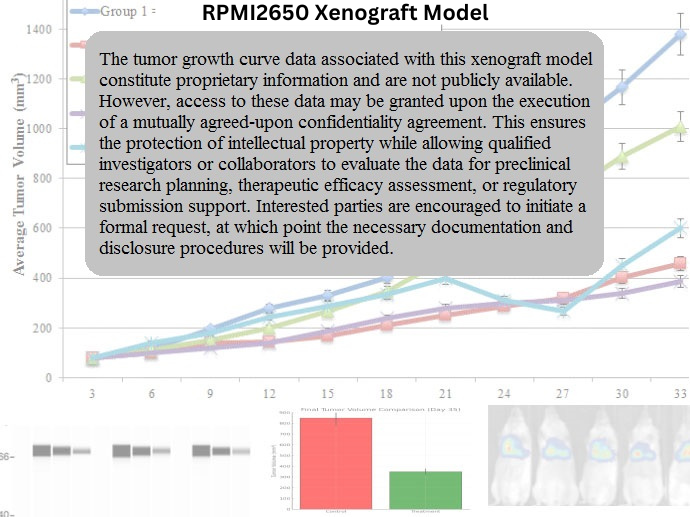
RPMI 2650 xenografts are typically generated by subcutaneous injection of tumor cells into immunodeficient mice, such as NOD/SCID or athymic nude strains. Tumor growth is moderate, with palpable nodules developing within 10–14 days post-implantation and reaching 700–900 mm³ over a period of 4–6 weeks. Tumors grow in a cohesive fashion and exhibit keratinizing squamous histology. Due to its respiratory tract origin, the RPMI 2650 model is uniquely suited for evaluating nasal or intranasal drug delivery systems, as well as localized therapeutic interventions targeting sinonasal tumors. Its predictable growth kinetics and epithelial architecture support its use in cytotoxic screening, radiosensitization trials, and mucosal pharmacology research.
Request a Custom Quote for RPMI2650 Xenograft ModelHistopathology and Immunohistochemical Profile
Histopathological examination of RPMI 2650 xenograft tumors reveals keratinizing squamous cell carcinoma with prominent intercellular bridges, keratin pearl formation, and epithelial stratification. Hematoxylin and eosin (H&E) staining demonstrates organized nests of tumor cells surrounded by fibrous stroma. Immunohistochemical staining confirms moderate expression of EGFR and strong cytokeratin positivity (CK5/6, CK14), consistent with squamous differentiation. The model also expresses mucosal adhesion markers such as claudin-1 and occludin, which support its application in mucosal barrier and permeability studies. Nuclear p53 staining is variable, while HER2 and p16INK4a are typically negative, consistent with its non-viral, EGFR-modulated oncogenic profile.
Preclinical Applications and Drug Response
The RPMI 2650 xenograft model has several niche applications in preclinical oncology and mucosal drug development. It is used to evaluate the efficacy of EGFR inhibitors, DNA damage response modulators, and radiosensitizers in head and neck squamous cell carcinomas. Additionally, the presence of functional tight junctions and nasal epithelial origin makes it a valuable tool for assessing intranasal drug delivery technologies and pharmacokinetics. The model supports testing of chemotherapeutic agents such as cisplatin and mitomycin C, as well as novel drug formulations targeting sinonasal malignancies. Its moderate mutation burden and distinct epithelial features allow for the evaluation of both targeted and non-targeted therapies in a controlled experimental setting.
Request This Model
To request access to the RPMI 2650 xenograft model for your sinonasal carcinoma or mucosal drug delivery research, please contact our team to receive complete model specifications and expert consultation on designing customized preclinical studies.
Request a Custom Quote for RPMI2650 Xenograft Model