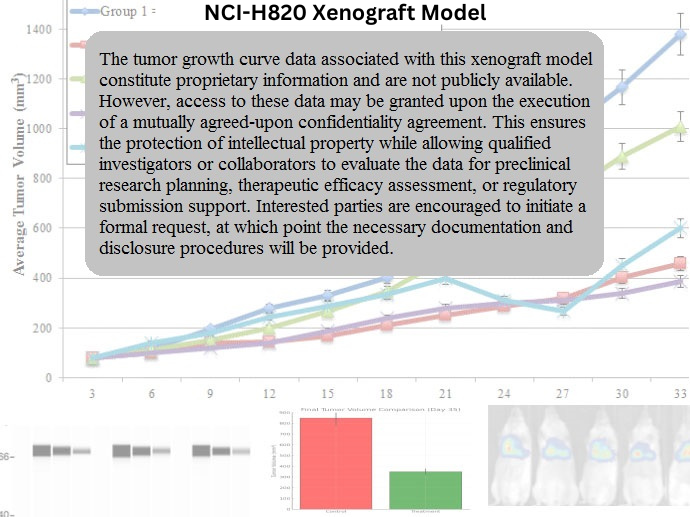
NCI-H820 Xenograft Model Overview
The NCI-H820 xenograft model is derived from a human non-small cell lung carcinoma (NSCLC) with adenocarcinoma histology and is particularly notable for harboring an EGFR exon 19 deletion as well as the T790M gatekeeper mutation. As such, it represents a clinically relevant model of acquired resistance to first-generation EGFR tyrosine kinase inhibitors (TKIs) such as gefitinib and erlotinib. The dual-mutant EGFR profile makes NCI-H820 an essential tool for preclinical evaluation of third-generation TKIs and combination therapeutic strategies aimed at overcoming EGFR resistance in lung adenocarcinoma. Its aggressive tumor kinetics and humanized molecular features allow for high translational value in drug development.
Request a Custom Quote for NCI‑H820 Xenograft ModelBiological and Molecular Characteristics
NCI-H820 cells are epithelial in morphology and express markers consistent with lung adenocarcinoma, including cytokeratin 7 (CK7) and TTF-1. Genetically, this cell line features a constitutively active EGFR receptor due to an exon 19 deletion and is resistant to reversible EGFR inhibitors because of the acquired T790M mutation. Additional molecular alterations include overexpression of MET and activation of the PI3K/AKT signaling axis, both of which contribute to therapeutic resistance and tumor cell survival. The cells are also KRAS wild-type, making them an ideal platform to study targeted therapies focused specifically on EGFR mutation-driven oncogenesis.
| Characteristic | NCI-H820 Cell Line Profile |
|---|---|
| Tumor Origin | Lung adenocarcinoma (NSCLC) |
| EGFR Mutation | Exon 19 deletion + T790M |
| KRAS Status | Wild-type |
| Molecular Pathways | EGFR⁺, MET⁺, PI3K/AKT⁺ |
| Drug Resistance Profile | Resistant to 1st-gen TKIs (erlotinib, gefitinib) |
In Vivo Model Development and Tumorigenicity
The NCI-H820 xenograft is developed by subcutaneous implantation of tumorigenic cells into immunodeficient mice, such as NOD/SCID or athymic nude strains. Tumors typically become measurable within 10–14 days and exhibit rapid volumetric expansion, making the model well-suited for short- to medium-duration therapeutic trials. The model demonstrates a high tumor take rate and robust growth kinetics, while maintaining genomic stability and histopathological consistency with the parent cell line. The presence of intrinsic EGFR-TKI resistance enables researchers to test the in vivo efficacy of irreversible EGFR inhibitors and resistance-reversing combination regimens.
Request a Custom Quote for NCI‑H820 Xenograft ModelHistopathology and Immunohistochemical Profile
Histological examination of NCI-H820 xenografts reveals moderately to poorly differentiated adenocarcinoma features with glandular morphology and prominent nucleoli. Tumor tissues show diffuse cytoplasmic staining for CK7 and nuclear positivity for TTF-1, confirming adenocarcinoma lineage. Immunohistochemical staining also demonstrates elevated expression of phosphorylated EGFR and strong membranous MET localization, in line with the molecular drivers of this cell line. A high Ki-67 proliferation index underscores the model’s aggressive growth characteristics, while moderate PD-L1 expression allows exploration of immune checkpoint blockade in resistant tumors.
Preclinical Applications and Drug Response
The NCI-H820 model plays a critical role in the preclinical assessment of third-generation EGFR TKIs, such as osimertinib, which selectively target the T790M mutation while sparing wild-type EGFR. It is also used for evaluating dual-inhibition strategies targeting EGFR and MET, as well as pathway inhibitors aimed at downstream signaling components like PI3K or mTOR. Due to its inherent resistance to first- and second-generation TKIs, this model facilitates the development of next-generation compounds and predictive biomarkers of response. It is also used in studies combining targeted therapy with immunotherapy, radiation, or chemotherapy to overcome multidrug resistance.
Request This Model
The NCI-H820 xenograft model provides an advanced platform for investigating resistance mechanisms and testing novel therapeutics in EGFR-mutant lung adenocarcinoma. For custom study designs, tumor growth datasets, or additional histological documentation, please contact our team to initiate your request.
Request a Custom Quote for NCI‑H820 Xenograft Model