NCI-H441 Xenograft Model Overview
The NCI-H441 xenograft model is derived from a human papillary adenocarcinoma of the lung and is classified under the broader category of non-small cell lung carcinoma (NSCLC). Originating from the lung tissue of a 58-year-old female patient, the NCI-H441 cell line is notable for its features mimicking Clara cells and alveolar type II pneumocytes. This model is frequently used in studies of pulmonary epithelial differentiation, surfactant protein expression, and lung-specific drug delivery systems. It also holds value in NSCLC research focused on non-oncogene-addicted subtypes, making it a relevant model for evaluating chemotherapeutic and anti-inflammatory agents in pulmonary oncology.
Request a Custom Quote for NCI‑H441 Xenograft ModelBiological and Molecular Characteristics
NCI-H441 cells exhibit an epithelial cobblestone morphology in vitro and grow as adherent monolayers. The cell line harbors wild-type KRAS and EGFR, with intact TP53, distinguishing it from many commonly used NSCLC models driven by oncogenic mutations. A defining feature of this line is its expression of surfactant proteins (SP-A and SP-B) and Clara cell secretory protein (CCSP), indicating its origin from differentiated airway epithelial cells. It also expresses tight junction proteins such as occludin and claudins, making it suitable for permeability studies. Its molecular neutrality in common driver mutations enhances its applicability in evaluating broad-spectrum therapeutics and non-targeted chemotherapies.
| Characteristic | NCI-H441 Cell Line Profile |
|---|---|
| Cancer Type | Non-small cell lung carcinoma (papillary adenocarcinoma) |
| KRAS/EGFR/TP53 Status | Wild-type |
| Surfactant Protein Expression | SP-A⁺, SP-B⁺ |
| Epithelial Marker Expression | Cytokeratin⁺, E-cadherin⁺, Claudin-3⁺ |
| Differentiation Status | Clara cell/alveolar type II pneumocyte-like |
In Vivo Model Development and Tumorigenicity
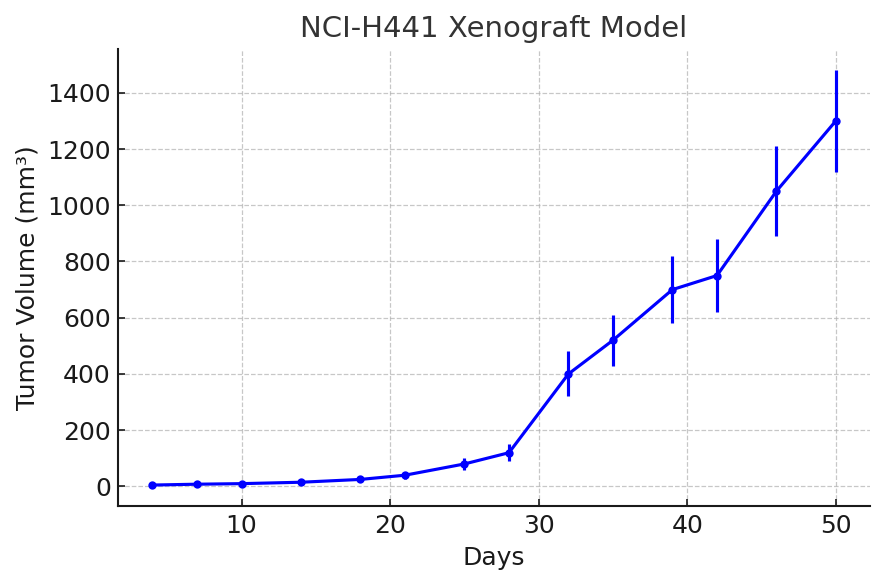
The NCI-H441 xenograft model is established through subcutaneous implantation of cultured cells into immunodeficient mice, typically nude or SCID strains. Tumor engraftment generally occurs within 10–14 days, with measurable growth progressing to 800–900 mm³ over a 4–6 week period. Compared to other NSCLC models, NCI-H441 demonstrates moderate tumorigenicity and growth kinetics. While its in vivo expansion is steady, it is not excessively aggressive, making it ideal for long-term pharmacokinetic and pharmacodynamic studies. This model is particularly valuable for testing compounds that affect lung epithelium differentiation, barrier function, or surfactant pathways.
Request a Custom Quote for NCI‑H441 Xenograft ModelHistopathology and Immunohistochemical Profile
Histological evaluation of NCI-H441 xenografts reveals well-differentiated adenocarcinomas composed of columnar epithelial cells arranged in glandular and papillary structures. The tumors exhibit abundant eosinophilic cytoplasm, intracellular vacuolation, and occasional mucus production. Immunohistochemical analysis confirms strong cytokeratin and E-cadherin expression, with surfactant protein A detected in the cytoplasm, supporting alveolar-like differentiation. Claudin-3 and occludin are localized to cell borders, indicating preserved tight junction integrity. Ki-67 proliferation indices are moderate, reflecting controlled proliferative behavior suitable for extended dosing schedules.
Preclinical Applications and Drug Response
The NCI-H441 xenograft model offers a unique platform for testing non-targeted chemotherapeutics, surfactant-based therapies, and epithelial barrier modulators. Due to its KRAS and EGFR wild-type status, it serves as a baseline model in comparative efficacy trials and is useful for studying pathways independent of oncogene addiction. The model supports investigations into drug permeability, respiratory epithelium-targeted delivery, and epithelial restitution following chemotherapeutic injury. It is also utilized in evaluating corticosteroids, cytokine blockers, and anti-fibrotic agents in a tumor context that recapitulates some features of normal lung physiology.
Request This Model
To include the NCI-H441 xenograft model in your research portfolio for epithelial lung cancer or pulmonary drug delivery, contact our scientific team to access full tumor growth profiles, validated histology data, and custom study design support for this differentiated NSCLC model.
Request a Custom Quote for NCI‑H441 Xenograft Model