NCI-H2286 Xenograft Model Overview
The NCI-H2286 xenograft model is derived from a human small cell lung carcinoma (SCLC) and serves as a highly relevant system for evaluating therapeutic interventions in aggressive neuroendocrine lung tumors. Originating from the pleural effusion of a male patient, the NCI-H2286 cell line exemplifies key molecular and histological features of classical SCLC, including rapid proliferation, loss of tumor suppressor function, and high expression of neuroendocrine markers. When engrafted into immunodeficient mice, NCI-H2286 cells form dense, rapidly growing subcutaneous tumors with consistent growth kinetics and robust neuroendocrine histopathology. This model is particularly suited for testing apoptosis-inducing agents, DNA repair pathway inhibitors, and drug resistance mechanisms in the context of high-grade neuroendocrine malignancy.
Request a Custom Quote for NCI-H2286 Xenograft ModelBiological and Molecular Characteristics
The NCI-H2286 cell line displays hallmark genetic alterations found in classical SCLC, including inactivation of TP53 and RB1, which drives uncontrolled proliferation and defective DNA damage checkpoints. Unlike many SCLC models, NCI-H2286 also harbors MYC amplification, promoting aggressive growth and transcriptional dysregulation. The cell line expresses high levels of synaptophysin, chromogranin A, and neuron-specific enolase (NSE), confirming its neuroendocrine lineage. It also shows strong expression of anti-apoptotic proteins such as BCL-2, survivin, and MCL-1, making it ideal for evaluating agents that target mitochondrial-mediated apoptotic resistance. Baseline PD-L1 expression is low, but the model retains MHC class I expression, permitting exploration of strategies to enhance tumor immunogenicity.
| Characteristic | Description |
|---|---|
| Tissue Origin | Human small cell lung carcinoma (pleural effusion) |
| Key Genetic Features | TP53 and RB1 inactivation, MYC amplification |
| Neuroendocrine Markers | Synaptophysin+, Chromogranin A+, NSE+ |
| Apoptotic Regulators | BCL-2+, survivin+, MCL-1+ |
| Immunophenotype | Low PD-L1, MHC class I positive |
In Vivo Model Development and Tumorigenicity
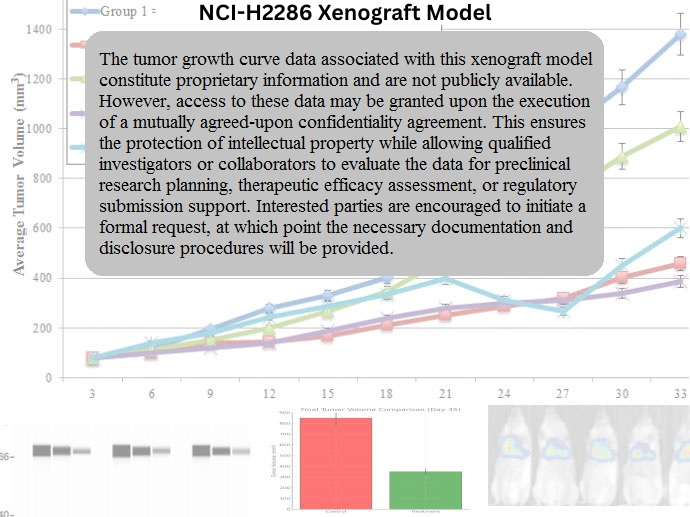
The NCI-H2286 xenograft model is established through subcutaneous injection into immunodeficient mice, including athymic nude or NOD/SCID strains. Tumors are typically palpable within 7–10 days post-implantation and grow rapidly, reaching experimental endpoints of 400–700 mm³ within three to four weeks. The model exhibits high tumor take rates, consistent morphology, and minimal necrosis, supporting reproducible drug response studies. Its fast growth rate is well-suited for short-term efficacy screens, dose optimization, and resistance modeling. Additionally, the aggressive nature of this model supports its use in testing relapse protocols and salvage therapy regimens relevant to refractory SCLC.
Request a Custom Quote for NCI-H2286 Xenograft ModelHistopathology and Immunohistochemical Profile
Histological examination of NCI-H2286-derived tumors reveals a poorly differentiated neuroendocrine phenotype typical of advanced SCLC. Hematoxylin and eosin staining demonstrates sheets of small, round cells with hyperchromatic nuclei, fine chromatin, and scant cytoplasm. The tumors show minimal stromal content and frequent mitotic figures. Immunohistochemistry confirms strong expression of synaptophysin and chromogranin A, as well as neuron-specific enolase, validating the neuroendocrine origin. A high Ki-67 index, often exceeding 85%, reflects the model’s aggressive proliferative behavior. Nuclear accumulation of p53 and diffuse cytoplasmic BCL-2 staining further confirm molecular hallmarks of apoptosis resistance. PD-L1 is expressed at low levels, though inducibility under cytokine exposure can be evaluated in therapeutic combination studies.
Preclinical Applications and Drug Response
The NCI-H2286 xenograft model is extensively used for testing therapies targeting the core vulnerabilities of SCLC. It responds to standard-of-care agents such as cisplatin and etoposide but is especially valuable in studies investigating drug resistance and relapse mechanisms. The presence of MYC amplification makes the model ideal for testing synthetic lethal combinations, including inhibitors of CHK1, ATR, or BRD4. Its high BCL-2 expression supports evaluation of BH3 mimetics and pro-apoptotic agents designed to overcome intrinsic resistance. Due to its rapid proliferation and low baseline immune activity, the model is also utilized in immunotherapy studies aimed at increasing tumor immunogenicity, such as chemotherapy-induced priming or epigenetic modulation. Overall, NCI-H2286 is a robust system for high-throughput preclinical testing in aggressive neuroendocrine lung cancer.
Request This Model
To request the NCI-H2286 xenograft model for your preclinical studies, please use the form below. A customized quote and additional model specifications will be provided upon inquiry.
Request a Custom Quote for NCI-H2286 Xenograft Model