NCI-H2228 Xenograft Model Overview
The NCI-H2228 xenograft model is derived from a non-small cell lung cancer (NSCLC) tumor classified as adenocarcinoma and isolated from a 58-year-old female patient. This cell line is notable for harboring the EML4-ALK fusion gene variant 3, a constitutively active tyrosine kinase that drives tumorigenesis in a subset of lung adenocarcinomas. As one of the most extensively studied ALK-rearranged NSCLC models, the NCI-H2228 xenograft is routinely used in the development of ALK inhibitors and resistance mechanism studies. It provides an essential in vivo platform for evaluating next-generation ALK-targeted therapies, particularly those designed to overcome resistance mutations such as L1196M and G1202R.
Request a Custom Quote for NCI‑H2228 Xenograft ModelBiological and Molecular Characteristics
NCI-H2228 cells exhibit adherent growth with polygonal morphology and moderate epithelial features. The defining genetic feature of the model is the EML4-ALK variant 3 fusion (E6;A20), which results in constitutive ALK kinase activity and downstream signaling through the PI3K/AKT and MAPK/ERK pathways. The cells also carry mutations in CDKN2A and exhibit modest expression of neuroendocrine markers, although they maintain a clearly adenocarcinomatous profile. ALK protein overexpression can be detected via immunoblot and immunohistochemistry, making this model ideal for biomarker validation and target engagement studies.
| Characteristic | NCI-H2228 Cell Line Profile |
|---|---|
| Cancer Type | Non-small cell lung cancer (adenocarcinoma) |
| Driver Mutation | EML4-ALK fusion (variant 3) |
| TP53 Status | Wild-type |
| KRAS/EGFR Status | Wild-type |
| Marker Expression | ALK⁺, cytokeratin⁺, SYP⁺/−, CD56⁺/− |
| Differentiation Status | Moderately differentiated adenocarcinoma |
In Vivo Model Development and Tumorigenicity
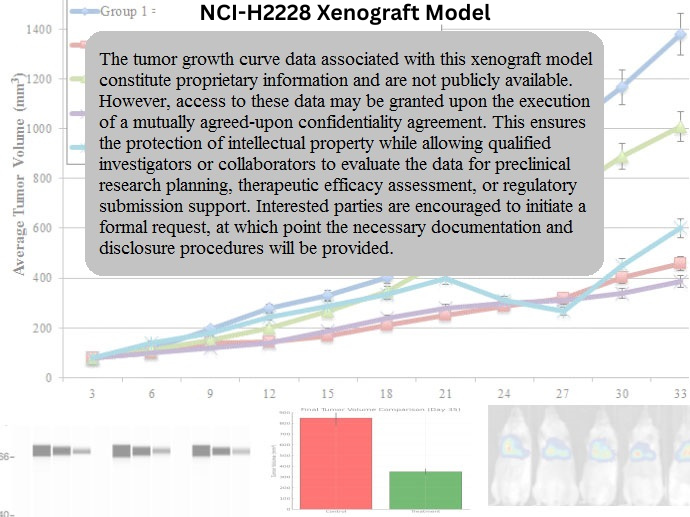
The NCI-H2228 xenograft model is generated by subcutaneous injection of cultured cells into immunodeficient mice, typically nude or NOD/SCID strains. Tumor engraftment occurs within 10–14 days, with linear growth reaching experimental volumes of 800–900 mm³ over 4–5 weeks. The model demonstrates consistent tumor kinetics, with high reproducibility in studies evaluating tumor regression upon ALK inhibition. Its relatively moderate proliferation rate and distinct molecular signature make it ideal for evaluating both monotherapies and combinatorial strategies. The xenograft responds robustly to ALK-targeted therapies such as crizotinib and alectinib, with measurable tumor shrinkage and pathway inhibition.
Request a Custom Quote for NCI‑H2228 Xenograft ModelHistopathology and Immunohistochemical Profile
Histological examination of NCI-H2228 xenograft tumors reveals a moderately differentiated adenocarcinoma phenotype composed of polygonal cells forming glandular structures, with eosinophilic cytoplasm and vesicular nuclei. Immunohistochemistry confirms strong ALK protein expression, along with diffuse cytokeratin staining. Variable expression of synaptophysin and CD56 can be observed, although these are typically focal and not indicative of true neuroendocrine transformation. Ki-67 proliferation indices are moderate, providing an appropriate window for drug efficacy analysis without rapid necrosis or spontaneous regression. This histological consistency enhances its value in comparative drug response studies.
Preclinical Applications and Drug Response
The NCI-H2228 xenograft model is the gold standard for preclinical evaluation of ALK inhibitors, including first-, second-, and third-generation agents such as crizotinib, ceritinib, brigatinib, and lorlatinib. It is frequently used to assess ALK phosphorylation status, downstream signaling suppression, and the emergence of resistance. Additionally, the model is used in combination therapy investigations involving HSP90 inhibitors, PI3K/AKT pathway antagonists, and immune modulators. Given its defined ALK fusion status and responsiveness to ALK inhibition, it is ideal for pharmacodynamic studies, resistance modeling, and therapeutic window optimization for ALK-rearranged NSCLC.
Request This Model
To incorporate the NCI-H2228 xenograft model into your ALK-driven NSCLC research or targeted drug development pipeline, contact our team for comprehensive tumor growth data, histology reports, and optimized ALK inhibition protocols tailored to this genetically defined preclinical system.
Request a Custom Quote for NCI‑H2228 Xenograft Model