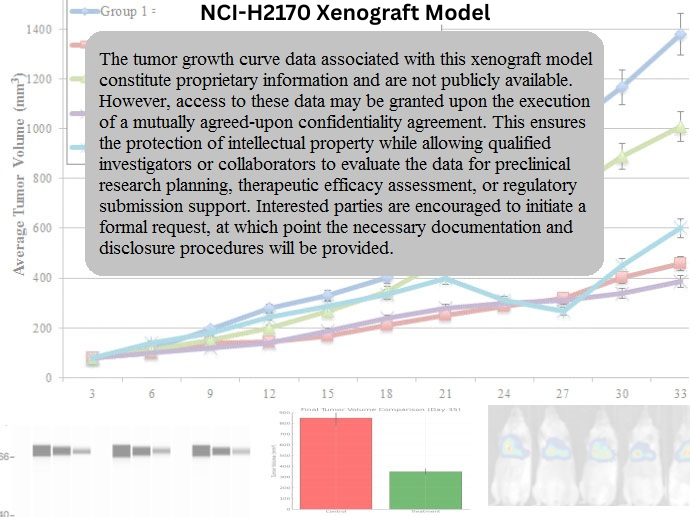
NCI-H2170 Xenograft Model Overview
The NCI-H2170 xenograft model is derived from a human non-small cell lung carcinoma (NSCLC) of squamous cell origin. As a model of lung squamous cell carcinoma (LSCC), it accurately recapitulates the histopathological and molecular characteristics of this subtype, including keratinization and intercellular bridging. The NCI-H2170 model is a valuable preclinical tool for evaluating chemotherapeutic agents, targeted therapies, and immunomodulatory strategies specific to squamous NSCLC, a subtype often lacking the targetable mutations found in lung adenocarcinomas. Its consistent tumorigenicity, defined molecular alterations, and moderate growth kinetics support its integration into translational oncology research pipelines.
Request a Custom Quote for NCI‑H2170 Xenograft ModelBiological and Molecular Characteristics
NCI-H2170 cells are epithelial in morphology and demonstrate strong expression of basal squamous markers such as cytokeratin 5/6 (CK5/6) and p63. These cells are negative for TTF-1, confirming their squamous origin, and lack EGFR mutations or ALK rearrangements that characterize other NSCLC subtypes. Genomic analyses have identified amplifications in SOX2 and FGFR1, two drivers commonly associated with LSCC pathogenesis. The cell line is also characterized by the overexpression of PD-L1 and moderate activation of the PI3K/AKT and MAPK pathways. These features make the NCI-H2170 model appropriate for studies focused on pathway-specific inhibitors and checkpoint blockade therapies.
| Characteristic | NCI-H2170 Cell Line Profile |
|---|---|
| Tumor Origin | Lung squamous cell carcinoma (NSCLC) |
| Marker Expression | CK5/6⁺, p63⁺, TTF-1⁻ |
| Genetic Alterations | SOX2⁺, FGFR1⁺, PI3K/AKT⁺, MAPK⁺ |
| Mutation Status | EGFR⁻, ALK⁻ |
| PD-L1 Expression | High |
In Vivo Model Development and Tumorigenicity
The NCI-H2170 xenograft model is established via subcutaneous injection into immunodeficient mouse strains such as athymic nude or NSG mice. Tumors typically become palpable within two weeks, with steady volumetric expansion over time. The model shows a reproducible tumor take rate and moderate tumor growth kinetics, permitting longer-term treatment regimens and pharmacokinetic evaluations. Its robust tumor architecture allows for consistent measurement of therapeutic responses and longitudinal imaging. Due to its squamous-specific features, this model is ideal for comparing the efficacy of agents developed for LSCC versus those targeting adenocarcinoma subtypes.
Request a Custom Quote for NCI‑H2170 Xenograft ModelHistopathology and Immunohistochemical Profile
Histological examination of NCI-H2170 xenograft tumors reveals features consistent with moderately differentiated squamous carcinoma, including abundant eosinophilic cytoplasm, intercellular bridges, and focal keratinization. Immunohistochemical analysis confirms strong cytoplasmic expression of cytokeratins 5 and 14, nuclear p63 positivity, and absence of thyroid transcription factor 1 (TTF-1). A high Ki-67 proliferation index is commonly observed, supporting its use in proliferation-based efficacy studies. PD-L1 expression is prominent in both tumor and stromal compartments, providing a suitable platform for immunotherapy investigations.
Preclinical Applications and Drug Response
The NCI-H2170 xenograft model supports the evaluation of numerous anti-cancer strategies, including platinum-based chemotherapy (cisplatin, carboplatin), FGFR1 inhibitors, and PI3K/mTOR pathway blockers. Given its squamous phenotype, the model is particularly useful for testing agents targeting basal cell markers or squamous-specific pathways. It is also used to assess checkpoint inhibitor monotherapy and combination immunotherapy regimens due to its elevated PD-L1 expression. This model enables comparative analyses of treatment efficacy across NSCLC subtypes and provides insight into the distinct biological behavior of squamous lung tumors.
Request This Model
For researchers seeking a robust and well-characterized model of lung squamous cell carcinoma, the NCI-H2170 xenograft offers high translational value. To request tumor volume datasets, histological profiles, or to discuss customized in vivo study designs, please reach out to initiate your project.
Request a Custom Quote for NCI‑H2170 Xenograft Model