NCI-H2126 Xenograft Model Overview
The NCI-H2126 xenograft model is derived from a human non-small cell lung cancer (NSCLC) tumor and represents an important system for studying KRAS-driven lung adenocarcinoma. Isolated from the pleural effusion of a male patient, the NCI-H2126 cell line carries a KRAS^G12C mutation, placing it among a clinically relevant subset of NSCLC cases that exhibit poor response to EGFR-targeted therapies. This model is widely used in preclinical settings to assess targeted inhibitors, combinatorial regimens, and resistance mechanisms associated with KRAS activation. When injected subcutaneously into immunodeficient mice, the NCI-H2126 line consistently forms tumors with moderate growth kinetics, offering a controlled platform for evaluating drug efficacy and therapeutic strategy optimization in KRAS-mutant contexts.
Request a Custom Quote for NCI-H2126 Xenograft ModelBiological and Molecular Characteristics
NCI-H2126 cells exhibit an epithelial morphology and are characterized by the presence of the KRAS^G12C mutation, which leads to constitutive activation of the RAS-MAPK signaling cascade. The cell line is EGFR wild-type and expresses a functional TP53 gene, distinguishing it from many NSCLC models that display dual pathway dysregulation. Immunophenotypically, the cells express cytokeratin 7 and E-cadherin, confirming epithelial lineage. PD-L1 expression is typically low under basal conditions but may be inducible in inflammatory microenvironments or in response to therapeutic intervention. The presence of the KRAS^G12C allele provides a defined molecular target for covalent KRAS inhibitors, while intact p53 signaling supports exploration of apoptosis-rescuing therapies.
| Characteristic | Description |
|---|---|
| Tissue Origin | Human lung (adenocarcinoma, pleural effusion) |
| Key Genetic Features | KRAS^G12C mutant, EGFR wild-type, TP53 wild-type |
| Cell Morphology | Epithelial, adherent |
| Immunomarkers | CK7+, E-cadherin+, PD-L1 (low basal expression) |
| Oncogenic Pathways | RAS-MAPK, apoptotic regulation, immune modulation |
In Vivo Model Development and Tumorigenicity
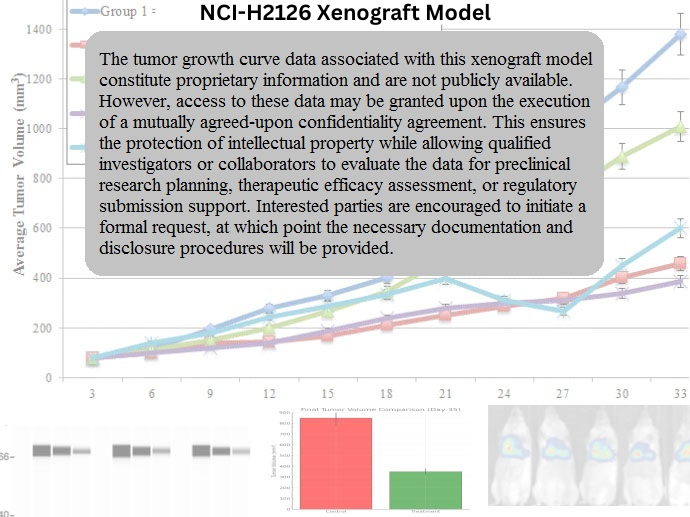
The NCI-H2126 xenograft model is established by subcutaneous implantation of cultured cells into immunodeficient mouse strains such as athymic nude or NOD/SCID. Tumors typically become palpable within 2 to 3 weeks post-inoculation, with volumes reaching 300–500 mm³ by five to six weeks. Tumor formation is consistent across cohorts, and the model demonstrates moderate take rates and manageable progression speed, allowing flexibility in experimental design and treatment schedules. Its moderately vascularized architecture supports effective delivery of systemic and local therapeutics. The tumor’s relatively stable growth kinetics and reproducible histology make it particularly suitable for pharmacodynamic profiling, time-course efficacy analyses, and biomarker discovery studies. This model is also compatible with engineered reporter systems for non-invasive imaging or tumor tracking.
Request a Custom Quote for NCI-H2126 Xenograft ModelHistopathology and Immunohistochemical Profile
Histological analysis of NCI-H2126-derived tumors reveals moderately differentiated adenocarcinoma with cohesive epithelial nests and glandular structures. Hematoxylin and eosin staining highlights variable nuclear pleomorphism, abundant cytoplasm, and occasional mitoses. The Ki-67 proliferation index typically ranges from 50% to 60%, indicating a steady but non-aggressive tumor growth rate. Immunohistochemical staining confirms cytoplasmic expression of cytokeratin 7 and membranous expression of E-cadherin, verifying epithelial origin. PD-L1 expression is focal and low under untreated conditions but may be enhanced following exposure to cytokines or immune modulators. The absence of neuroendocrine markers and the retention of p53 protein support the model’s use in targeted therapy development focused on KRAS inhibition, apoptosis restoration, and immune sensitization.
Preclinical Applications and Drug Response
The NCI-H2126 xenograft model serves as a pivotal platform for evaluating next-generation KRAS^G12C inhibitors such as sotorasib and adagrasib, particularly in combination with downstream MAPK or PI3K pathway inhibitors. The model also facilitates studies exploring BCL-2/BCL-XL antagonists, pro-apoptotic agents, and chemotherapy combinations. It has shown limited response to EGFR inhibitors, validating its classification as a non-EGFR-driven model. PD-L1 expression modulation studies have been conducted in this system, particularly in the context of IFN-γ stimulation and checkpoint blockade combination strategies. Due to its reproducible tumor architecture and reliable growth profile, the NCI-H2126 model is frequently used in nanoparticle-based drug delivery experiments and pharmacokinetic analyses involving both small molecules and biologics.
Request This Model
To request the NCI-H2126 xenograft model for your preclinical studies, please use the form below. A customized quote and additional model specifications will be provided upon inquiry.
Request a Custom Quote for NCI-H2126 Xenograft Model