NCI-H211 Xenograft Model Overview
The NCI-H211 xenograft model is derived from a human small cell lung carcinoma (SCLC) and provides a representative in vivo platform for investigating the biology and treatment responsiveness of high-grade neuroendocrine tumors. Isolated from a lymph node metastasis of a male patient, the parental NCI-H211 cell line displays classical features of SCLC, including rapid proliferation, loss of tumor suppressor function, and neuroendocrine differentiation. This model is used extensively in translational oncology to evaluate chemotherapeutics, apoptosis-targeting compounds, and agents that exploit DNA repair vulnerabilities. When implanted subcutaneously into immunodeficient mice, NCI-H211 cells form highly cellular, aggressive tumors that mimic the growth kinetics and histopathological characteristics of human SCLC, enabling rigorous preclinical efficacy and resistance mechanism studies.
Request a Custom Quote for NCI-H211 Xenograft ModelBiological and Molecular Characteristics
NCI-H211 cells exhibit hallmark features of small cell lung cancer, including biallelic inactivation of TP53 and RB1, leading to deregulated cell cycle progression and defective apoptosis. The cell line expresses high levels of neuroendocrine markers such as synaptophysin, chromogranin A, and neuron-specific enolase (NSE), reflecting its well-differentiated neuroendocrine phenotype. Additionally, it shows elevated expression of anti-apoptotic proteins such as BCL-2 and survivin, supporting its relevance in studies involving apoptosis-rescuing therapies and synthetic lethality. The cell line is KRAS and EGFR wild-type and lacks MYC amplification, situating it within the genomically stable subset of SCLC. PD-L1 expression is generally low, although the model retains intact MHC class I expression, allowing for studies involving immunogenic modulation.
| Characteristic | Description |
|---|---|
| Tissue Origin | Human small cell lung carcinoma (lymph node metastasis) |
| Key Genetic Features | TP53 and RB1 inactivation; KRAS/EGFR wild-type |
| Neuroendocrine Markers | Synaptophysin+, Chromogranin A+, NSE+ |
| Anti-apoptotic Proteins | High BCL-2, survivin |
| Proliferation Rate | Rapid, high mitotic index |
In Vivo Model Development and Tumorigenicity
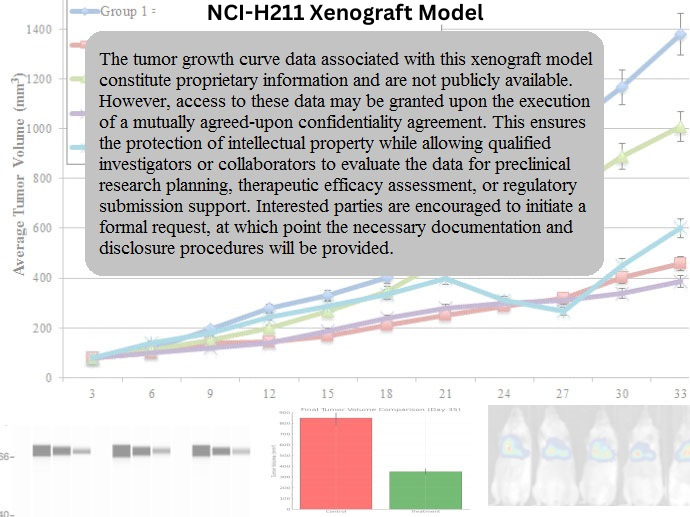
The NCI-H211 xenograft model is established by subcutaneous injection into immunodeficient mice, such as nude or NOD/SCID strains. Tumors become palpable within 7–10 days and demonstrate rapid progression, often reaching target volumes of 400–700 mm³ within three to four weeks. The model’s aggressive growth and high tumor take rate make it ideal for fast-paced efficacy testing, time-sensitive pharmacodynamic assessments, and drug resistance studies. Tumors display high vascularity and low necrotic core formation, supporting homogeneous tissue penetration and reproducibility in therapeutic evaluations. Its classical SCLC phenotype also enables modeling of relapse and resistance following standard chemotherapy exposure, providing insights into acquired resistance mechanisms and alternative therapeutic strategies.
Request a Custom Quote for NCI-H211 Xenograft ModelHistopathology and Immunohistochemical Profile
NCI-H211 xenografts present as poorly differentiated neuroendocrine tumors with high cellular density, scant cytoplasm, and finely granular chromatin. Hematoxylin and eosin staining shows solid sheets of small round cells, extensive mitotic activity, and focal areas of necrosis in larger tumors. Ki-67 immunostaining typically reveals a proliferation index greater than 80%, confirming the highly aggressive nature of the tumor. Immunohistochemistry confirms expression of neuroendocrine markers including synaptophysin, chromogranin A, and NSE. Additionally, high levels of BCL-2 are observed, consistent with its anti-apoptotic phenotype. PD-L1 expression is low under basal conditions, but the presence of MHC class I antigens supports investigation of immune sensitization or priming therapies. The model’s well-defined histologic profile facilitates reproducible data generation across studies.
Preclinical Applications and Drug Response
The NCI-H211 xenograft model is broadly used in SCLC drug discovery and development, particularly for evaluating chemotherapeutic agents such as cisplatin, carboplatin, and etoposide. Its apoptotic resistance phenotype also supports the study of BCL-2 inhibitors, including venetoclax and other BH3 mimetics. The model has demonstrated responsiveness to PARP inhibitors and agents targeting DNA damage repair pathways, particularly in combination with cytotoxic regimens. Due to its intact MHC class I and low PD-L1 expression, it is employed in immunotherapy studies aimed at enhancing tumor antigenicity or overcoming immune evasion. The NCI-H211 model’s high reproducibility, rapid tumor progression, and classical SCLC profile make it a benchmark system for evaluating novel treatment regimens, drug delivery systems, and resistance-mitigation strategies in small cell lung cancer.
Request This Model
To request the NCI-H211 xenograft model for your preclinical studies, please use the form below. A customized quote and additional model specifications will be provided upon inquiry.
Request a Custom Quote for NCI-H211 Xenograft Model