NCI-H1623 Xenograft Model Overview
The NCI-H1623 xenograft model is derived from a human non-small cell lung cancer (NSCLC), specifically of the adenocarcinoma subtype. Established from a male patient, the NCI-H1623 cell line exhibits moderately differentiated epithelial morphology and is notable for its wild-type EGFR and KRAS status, combined with loss-of-function mutations in TP53 and STK11. This model supports robust tumor growth when implanted subcutaneously into immunodeficient mice and is commonly used in preclinical studies investigating metabolic vulnerability, DNA damage repair pathways, and tumor progression mechanisms in EGFR/KRAS-independent NSCLC. With its stable tumorigenicity and defined molecular profile, the NCI-H1623 xenograft model serves as a critical tool for drug development in oncogene-negative lung adenocarcinomas.
Request a Custom Quote for NCI‑H1623 Xenograft ModelBiological and Molecular Characteristics
NCI-H1623 cells are characterized by a combination of tumor suppressor gene inactivation and a non-oncogene–addicted genomic landscape. The cell line is wild-type for EGFR, KRAS, and ALK, while harboring mutations in TP53 and STK11, the latter of which contributes to metabolic deregulation and resistance to immune checkpoint therapies. The cells express typical epithelial markers such as cytokeratin 7 and E-cadherin, but exhibit low PD-L1 expression and altered interferon signaling. These features support its utility in studying DNA damage responses, oxidative stress pathways, and immune-evasive mechanisms that define a clinically challenging NSCLC subtype.
| Characteristic | Description |
|---|---|
| Tissue Origin | Human lung adenocarcinoma |
| Key Alterations | TP53 and STK11 inactivation |
| Mutation Status | EGFR, KRAS, ALK wild-type |
| Immunomarkers | CK7+, E-cadherin+, PD-L1 (low), MHC I (variable) |
| Therapeutic Relevance | STK11-mutant NSCLC, immune-evasive and metabolic targets |
In Vivo Model Development and Tumorigenicity
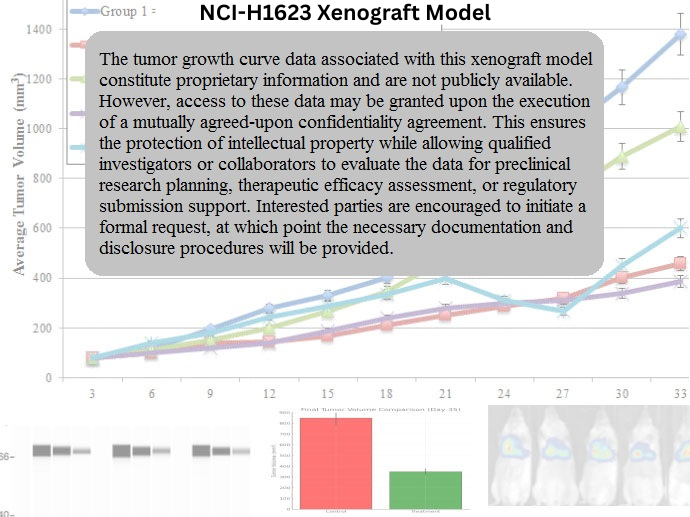
The NCI-H1623 xenograft model is generated by subcutaneous injection into immunocompromised mice, including athymic nude or NOD/SCID strains. Tumors generally form within 10–14 days and grow to study-ready volumes of 300–500 mm³ within five to six weeks. The model demonstrates consistent tumor take and linear growth kinetics, supporting standard pharmacologic assessment protocols. It is frequently used in studies exploring synthetic lethality in the context of STK11 inactivation, and for evaluating metabolic inhibitors, ferroptosis inducers, and mTOR pathway antagonists. Due to its EGFR- and KRAS-wild-type status, it also allows for clean assessment of targeted therapies without interference from dominant oncogenic drivers.
Request a Custom Quote for NCI‑H1623 Xenograft ModelHistopathology and Immunohistochemical Profile
Histologic analysis of NCI-H1623-derived tumors reveals moderately differentiated adenocarcinoma with glandular formations, moderate cellular atypia, and variable stromal infiltration. Hematoxylin and eosin staining shows frequent mitotic figures, nuclear pleomorphism, and focal necrosis. Immunohistochemically, tumor sections stain strongly for CK7 and E-cadherin, indicating epithelial identity. TP53 inactivation is supported by nuclear accumulation of mutant p53 protein, while STK11 loss is evidenced by reduced AMPK pathway activity in associated biomarker panels. The Ki-67 proliferation index ranges from 50–70%, and PD-L1 expression remains low across tumor sections, allowing for immune-sensitization studies.
Preclinical Applications and Drug Response
The NCI-H1623 xenograft model is commonly applied in preclinical studies aimed at understanding and overcoming resistance mechanisms in NSCLC lacking dominant oncogenic drivers. Its TP53 and STK11 mutations render it sensitive to DNA-damaging agents, PARP inhibitors, and metabolic pathway-targeting drugs. The model has also been used in evaluating glutaminase inhibitors, autophagy modulators, and ferroptosis-based therapeutics. Due to its low immunogenicity, it serves as a valuable platform for immunotherapy adjuvant development, particularly in strategies that enhance antigen presentation or reverse immune suppression through epigenetic or metabolic reprogramming. Overall, NCI-H1623 offers a translationally relevant tool for drug screening and resistance mechanism interrogation in genomically complex NSCLC.
Request This Model
To request the NCI-H1623 xenograft model for your preclinical studies, please use the form below. A customized quote and additional model specifications will be provided upon inquiry.
Request a Custom Quote for NCI‑H1623 Xenograft Model