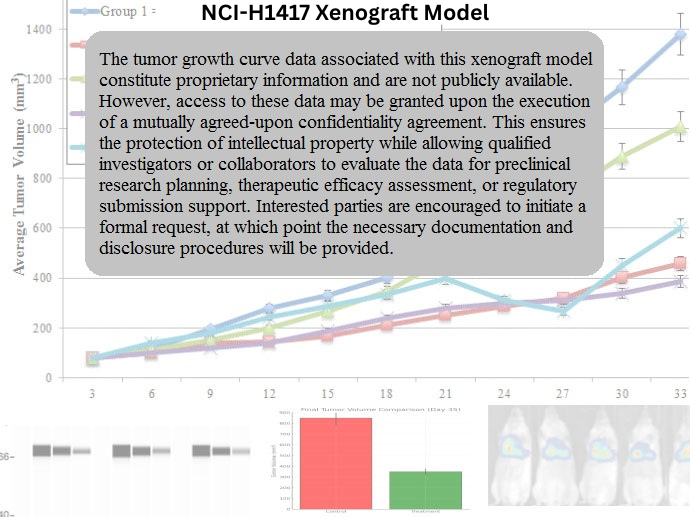
NCI-H1417 Xenograft Model Overview
The NCI-H1417 xenograft model is derived from a human squamous cell carcinoma (SCC) of the lung and is a well-established system for studying non-small cell lung cancer (NSCLC) with squamous histology. As a subtype of NSCLC, squamous cell carcinoma presents distinct molecular and clinical features, including limited response to EGFR-targeted therapies and unique resistance mechanisms. The NCI-H1417 cell line, established from a primary lung SCC tumor, retains key pathological characteristics and genetic markers that mirror clinical squamous tumors, making it a suitable in vivo platform for evaluating cytotoxic therapies, immune checkpoint inhibitors, and novel molecular targets.
Request a Custom Quote for NCI‑H1417 Xenograft ModelBiological and Molecular Characteristics
The NCI-H1417 cell line exhibits epithelial morphology with keratinization, consistent with its squamous origin. Molecularly, it expresses high levels of cytokeratin 5/6 and p63, which are definitive squamous lineage markers. Unlike adenocarcinoma-derived lines, NCI-H1417 lacks activating EGFR or ALK mutations and instead often harbors genomic alterations characteristic of squamous cell tumors, such as FGFR1 amplification, TP53 mutations, and SOX2 overexpression. The absence of key adenocarcinoma drivers makes the model particularly relevant for studying squamous-specific pathways and therapeutic strategies.
| Characteristic | NCI-H1417 Cell Line Profile |
|---|---|
| Tumor Origin | Lung squamous cell carcinoma |
| Lineage Markers | Cytokeratin 5/6⁺, p63⁺ |
| EGFR/ALK Mutation Status | Wild-type |
| Common Alterations | TP53 mutation, FGFR1 amplification, SOX2⁺ |
| Histological Features | Squamous morphology with keratin pearls |
In Vivo Model Development and Tumorigenicity
The NCI-H1417 xenograft model is generated by subcutaneous injection of tumor cells into immunodeficient mice, typically nude or NOD/SCID strains. Tumor formation occurs reliably within 10–14 days, and the model exhibits consistent growth kinetics, with tumors reaching measurable volumes within 3–4 weeks. The xenografts exhibit keratinizing squamous morphology and maintain molecular fidelity to the parental cell line. The model is ideal for preclinical testing of agents targeting squamous-enriched signaling pathways and for assessing combination regimens that include radiation or immune-modulating drugs, both of which are highly relevant in SCC treatment paradigms.
Request a Custom Quote for NCI‑H1417 Xenograft ModelHistopathology and Immunohistochemical Profile
Histopathologic analysis of NCI-H1417 xenografts reveals nests and cords of atypical squamous epithelial cells with prominent intercellular bridges and occasional keratin pearl formation. Mitotic activity is moderate to high, and necrotic regions are frequently observed. Immunohistochemistry confirms expression of squamous markers including p63, cytokeratin 5/6, and involucrin. Ki-67 staining typically exceeds 50%, indicating active proliferation. This histological and immunophenotypic profile aligns closely with clinical squamous cell carcinomas, reinforcing the translational relevance of this model.
Preclinical Applications and Drug Response
The NCI-H1417 xenograft model has been widely utilized in the evaluation of chemotherapy agents such as cisplatin and gemcitabine, which are standard-of-care in squamous NSCLC. It is also well suited for testing FGFR inhibitors, given its frequent amplification of FGFR1. The model’s resistance to EGFR tyrosine kinase inhibitors further supports its value in developing alternative treatment approaches tailored to squamous histology. Investigators have employed this model to study radiation therapy responsiveness, tumor hypoxia adaptation, and tumor-immune interactions in the squamous NSCLC microenvironment. Overall, NCI-H1417 provides a reliable and clinically pertinent platform for developing therapeutics aimed at squamous cell lung carcinoma.
Request This Model
To incorporate the NCI-H1417 xenograft model into your lung cancer research program, contact us to receive tumor growth data, histological validation, and expert consultation on designing customized preclinical studies.
Request a Custom Quote for NCI‑H1417 Xenograft Model