MHCC97H Xenograft Model Overview
The MHCC97H xenograft model is derived from a highly metastatic human hepatocellular carcinoma (HCC) cell line established from a male patient with poorly differentiated liver cancer. MHCC97H was generated through in vivo selection for high metastatic potential from its parental MHCC97 cell line, and it has since become a benchmark model for studying aggressive HCC. Known for its robust tumorigenicity and spontaneous lung metastasis, this model replicates critical aspects of advanced-stage liver cancer, including epithelial-to-mesenchymal transition (EMT), vascular invasion, and multi-organ dissemination. MHCC97H xenografts are widely used to evaluate anti-metastatic therapies, signaling inhibitors, and immunotherapeutic approaches in preclinical hepatocellular carcinoma research.
Request a Custom Quote for MHCC97H Xenograft ModelBiological and Molecular Characteristics
MHCC97H cells exhibit a mesenchymal-like morphology and express a unique profile of genes associated with EMT, angiogenesis, and tumor progression. Key molecular features include elevated expression of vimentin, N-cadherin, VEGF, MMP-9, and reduced levels of E-cadherin, consistent with a mesenchymal phenotype. The cell line is p53 wild-type and displays activation of the MAPK, TGF-β, and PI3K/AKT pathways. MHCC97H cells also show high expression of CD44 and EpCAM, contributing to their stem-like properties and metastatic capacity. These characteristics make the model particularly useful for interrogating molecular mechanisms underlying invasion, chemoresistance, and metastatic relapse.
| Characteristic | MHCC97H Cell Line Profile |
|---|---|
| Cancer Type | Hepatocellular carcinoma (HCC) |
| Origin | Human liver (highly metastatic subline) |
| EMT Markers | Vimentin⁺, N-cadherin⁺, E-cadherin⁻ |
| Angiogenesis Factors | VEGF⁺, MMP-9⁺ |
| Signaling Pathways | TGF-β, PI3K/AKT, MAPK |
| Metastatic Potential | High (spontaneous lung metastasis in vivo) |
In Vivo Model Development and Tumorigenicity
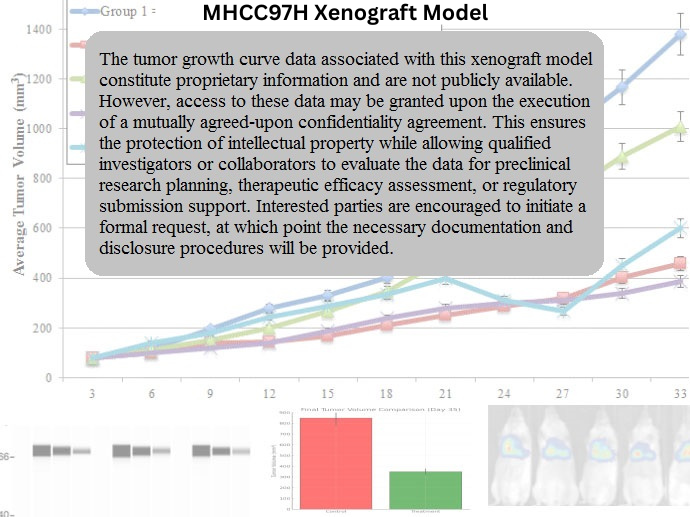
The MHCC97H xenograft model is established in immunodeficient mice through either subcutaneous or orthotopic liver injection. Subcutaneous injection yields rapid tumor formation, with growth initiation typically observed within 7–10 days and volumes reaching 800–900 mm³ by 4–5 weeks. Orthotopic implantation into the murine liver results in both localized hepatic tumor formation and spontaneous metastasis, particularly to the lungs. This orthotopic variant enables more comprehensive modeling of tumor vascularization, portal vein invasion, and distant organ colonization. The high engraftment rate and consistent metastatic spread support its application in evaluating systemic therapies and metastasis-inhibiting agents.
Request a Custom Quote for MHCC97H Xenograft ModelHistopathology and Immunohistochemical Profile
MHCC97H xenograft tumors exhibit a poorly differentiated histological architecture, with highly pleomorphic cells arranged in disorganized nests and cords. The tumors are characterized by high mitotic activity, nuclear atypia, and areas of necrosis. Immunohistochemical staining confirms overexpression of vimentin and N-cadherin, along with focal expression of hepatocellular markers such as AFP and CK18. High Ki-67 indices denote a proliferative phenotype, while VEGF and CD31 staining indicate enhanced tumor vascularity. In orthotopic models, metastatic foci in the lungs replicate the histopathological features of primary hepatic tumors, making this model ideal for tracking disease progression and metastatic burden.
Preclinical Applications and Drug Response
The MHCC97H xenograft model is extensively employed in the preclinical evaluation of anti-HCC compounds, with a particular emphasis on agents targeting metastasis, angiogenesis, and EMT pathways. It responds to multikinase inhibitors such as sorafenib and regorafenib but displays partial resistance that models the clinical challenge of acquired drug resistance in advanced HCC. The model is also used to investigate combination therapies involving immune checkpoint inhibitors, TGF-β blockers, and PI3K/AKT pathway antagonists. Additionally, MHCC97H is suitable for exploring liver-specific drug delivery systems and nanoparticle formulations targeting metastatic spread or tumor stem cell subpopulations.
Request This Model
To incorporate the MHCC97H xenograft model into your liver cancer research or anti-metastatic drug development efforts, please contact our team for access to validated protocols, orthotopic implantation services, and customizable study packages designed for translational HCC research.
Request a Custom Quote for MHCC97H Xenograft Model