MDA-MB-435S Xenograft Model Overview
The MDA-MB-435S xenograft model is derived from the MDA-MB-435S cell line, originally established from a metastatic human melanoma tumor. This model is one of the most well-characterized and widely used systems for studying melanoma biology, particularly in the context of BRAF-wildtype and amelanotic melanoma. MDA-MB-435S xenografts retain the aggressive growth characteristics and metastatic potential of the parent tumor, making them an excellent platform for investigating targeted therapies, combination treatments, and novel drug classes in metastatic melanoma. The model is particularly useful in studies focused on immune modulation, resistance to conventional therapies, and novel therapeutic agents aimed at BRAF-wildtype melanomas.
Request a Custom Quote for MDA‑MB‑435S Xenograft ModelBiological and Molecular Characteristics
MDA-MB-435S cells are known for their expression of melanocyte differentiation antigens such as HMB-45, S100, and Melan-A. The cell line is BRAF wild-type, which makes it an ideal model for studying melanoma that does not rely on BRAF mutations for tumorigenesis. This model exhibits high levels of NRAS and PI3K/AKT pathway activation, along with reduced PTEN expression, leading to resistance to apoptosis and a tendency toward aggressive tumor progression. The absence of pigmentation in these cells and their relatively low mutational burden make them a useful tool for evaluating therapies targeting other signaling pathways outside the BRAF-MEK-ERK axis.
| Characteristic | Description |
|---|---|
| Tumor Origin | Human cutaneous melanoma (metastatic) |
| Key Mutation Status | BRAF wild-type, NRAS and PI3K/AKT activation, reduced PTEN |
| Antigen Expression | S100+, HMB-45+, Melan-A+ |
| Signaling Pathways | NRAS/PI3K/AKT pathway activation, loss of PTEN |
| Therapeutic Relevance | BRAF/MEK inhibitors, PI3K/AKT inhibitors, immune modulation |
In Vivo Model Development and Tumorigenicity
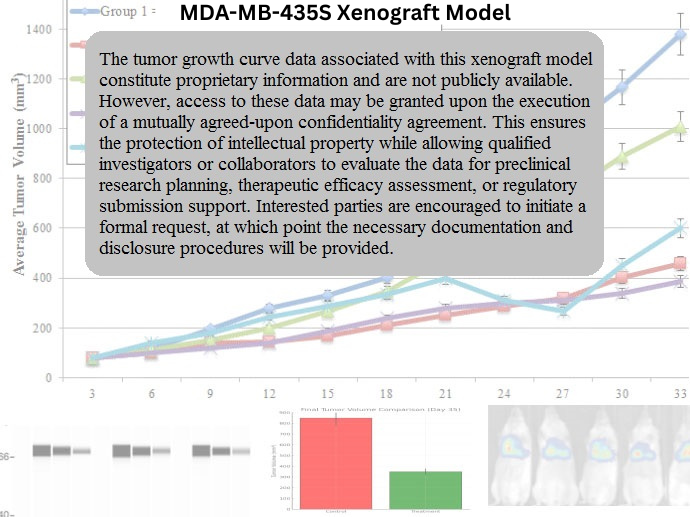
The MDA-MB-435S xenograft model is established by injecting cultured cells subcutaneously into immunodeficient mouse strains such as NSG or NOD/SCID. Tumor formation typically occurs within 2–3 weeks, and tumors grow rapidly, reaching 500–900 mm³ in approximately 6 weeks. The model’s aggressive growth and high tumor take rate make it ideal for evaluating novel therapies. Spontaneous metastasis is occasionally observed, particularly in lung and lymphatic tissues, allowing for studies of both primary tumor growth and metastatic dissemination. This makes the MDA-MB-435S model particularly useful for testing combination therapies and treatments that target metastatic melanoma.
Request a Custom Quote for MDA‑MB‑435S Xenograft ModelHistopathology and Immunohistochemical Profile
Histological analysis of MDA-MB-435S xenografts reveals a poorly differentiated tumor with a mix of spindle and epithelioid cell morphology. The tumor cells exhibit pleomorphic nuclei with dispersed chromatin and prominent mitotic figures. Hematoxylin and eosin staining shows dense, irregular tumor cell infiltration without follicular or glandular structures. Immunohistochemical staining reveals strong positivity for melanocytic markers such as HMB-45 and S100, confirming the melanoma origin. Additionally, Ki-67 proliferation indices are high, typically exceeding 60%, reflecting the aggressive growth rate of the tumors.
Preclinical Applications and Drug Response
The MDA-MB-435S xenograft model has been widely used for studying melanoma therapies that target the MAPK pathway, such as MEK inhibitors and BRAF inhibitors, especially in the context of BRAF wild-type melanoma. The model is also well-suited for evaluating therapies that target the PI3K/AKT pathway, immune checkpoint inhibitors, and combination regimens involving these agents. The model has demonstrated resistance to standard chemotherapies, making it useful for assessing novel agents and combination therapies designed to overcome resistance mechanisms in advanced melanoma. Additionally, this model is used to study immune-oncology approaches such as immune checkpoint blockade and adoptive T-cell therapies.
Request This Model
To request the MDA-MB-435S xenograft model for your preclinical studies, please use the form below. A customized quote and additional model specifications will be provided upon inquiry.
Request a Custom Quote for MDA‑MB‑435S Xenograft Model