LU99 Xenograft Model Overview
The LU99 xenograft model is derived from a human non-small cell lung carcinoma (NSCLC), specifically adenocarcinoma, and provides a well-characterized in vivo system for evaluating therapeutic agents in the context of EGFR-independent tumor growth. Originating from a Japanese male patient, the LU99 cell line forms consistent subcutaneous tumors in immunodeficient mice, offering a reproducible model for evaluating cytotoxic and pathway-targeted therapies. It is particularly relevant for studies investigating drug response in tumors lacking common driver mutations such as EGFR and KRAS, supporting research into alternative mechanisms of tumor progression, chemoresistance, and therapeutic sensitization in NSCLC.
Request a Custom Quote for LU99 Xenograft ModelBiological and Molecular Characteristics
LU99 cells exhibit a wild-type status for EGFR, KRAS, and ALK, making them suitable for studying treatment approaches in NSCLC lacking targetable oncogenes. The cell line expresses epithelial markers, including cytokeratin 7 and E-cadherin, consistent with adenocarcinoma lineage. It also demonstrates relatively low expression of PD-L1 and impaired interferon response signaling, features associated with reduced baseline immunogenicity. The LU99 molecular profile suggests dependency on noncanonical pathways such as cell cycle regulators, apoptosis mediators, and transcriptional modulators, making it a valuable model for testing broad-spectrum chemotherapies and experimental agents that disrupt core tumor survival mechanisms.
| Characteristic | Description |
|---|---|
| Tissue Origin | Human lung adenocarcinoma |
| Mutation Profile | EGFR, KRAS, ALK wild-type |
| Cell Morphology | Epithelial, adherent |
| Immunomarkers | CK7+, E-cadherin+, PD-L1 (low) |
| Therapeutic Relevance | EGFR/KRAS-negative NSCLC, cytotoxic and transcriptional therapies |
In Vivo Model Development and Tumorigenicity
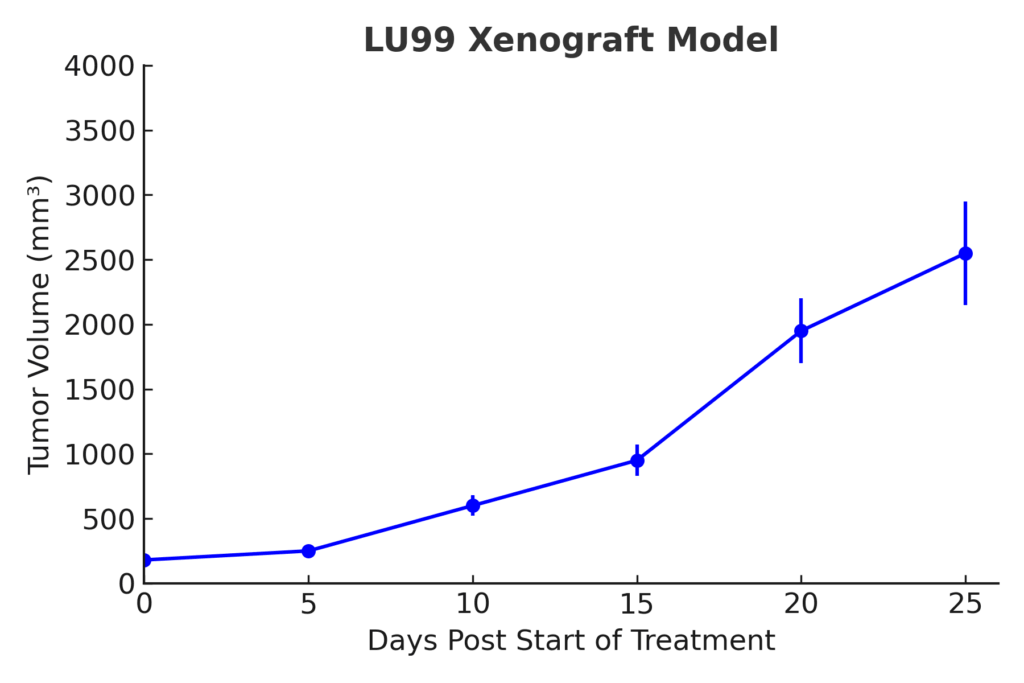
The LU99 xenograft model is generated via subcutaneous injection into immunodeficient mice, including NOD/SCID or athymic nude strains. Tumor formation typically occurs within 10–14 days post-implantation and exhibits predictable linear growth to study-ready volumes of 300–500 mm³ within four to six weeks. The model demonstrates high tumor take rates and consistent volumetric progression, enabling controlled therapeutic testing across treatment cohorts. It is commonly employed in preclinical studies evaluating chemotherapeutic agents, mitotic checkpoint inhibitors, transcriptional regulators, and pro-apoptotic compounds. The model’s tumor biology also permits mechanistic studies of DNA damage response and adaptive resistance without confounding effects from dominant oncogenic drivers.
Request a Custom Quote for LU99 Xenograft ModelHistopathology and Immunohistochemical Profile
Histologically, LU99-derived tumors present as moderately differentiated adenocarcinomas with glandular structures, nuclear pleomorphism, and occasional necrotic foci. Hematoxylin and eosin staining reveals organized tumor architecture with high cellular density and frequent mitotic figures. Immunohistochemistry confirms expression of cytokeratin 7 and E-cadherin, indicating epithelial origin. Ki-67 labeling frequently exceeds 60%, reflecting the model’s high proliferative potential. TP53 dysfunction is commonly observed and contributes to apoptotic resistance. PD-L1 staining remains low or undetectable, suggesting limited innate immune visibility but creating an opportunity for preclinical exploration of immune activation strategies or checkpoint inhibitor sensitization.
Preclinical Applications and Drug Response
The LU99 xenograft model is broadly utilized in evaluating therapeutic strategies for NSCLC lacking identifiable oncogenic drivers. Its EGFR/KRAS/ALK wild-type status supports studies of chemotherapies such as platinum-doublets, taxanes, and novel cytotoxic compounds. Investigational agents that target cell cycle progression (e.g., CDK inhibitors), transcriptional regulation (e.g., BET or CDK7 inhibitors), and mitochondrial apoptosis have shown activity in this model. Combination regimens aimed at enhancing antitumor efficacy through synergistic targeting of proliferation and survival pathways are also actively explored. Due to its low PD-L1 expression and immune-cold phenotype, LU99 is suitable for testing immune sensitization strategies and novel immunotherapeutic combinations, including epigenetic modulators and STING agonists.
Request This Model
To request the LU99 xenograft model for your preclinical studies, please use the form below. A customized quote and additional model specifications will be provided upon inquiry.
Request a Custom Quote for LU99 Xenograft Model