KYSE-150 Xenograft Model Overview
The KYSE-150 xenograft model is derived from a human esophageal squamous cell carcinoma (ESCC) cell line established from a poorly differentiated tumor in a 67-year-old Japanese male. Part of the extensively utilized KYSE series, KYSE-150 offers a biologically and clinically relevant system for studying squamous esophageal cancer in vivo. The model is well characterized by rapid tumor formation, aggressive progression, and strong histological fidelity to human ESCC. Its stable tumorigenic profile and molecular features reflective of squamous malignancy make it an indispensable tool for preclinical research involving EGFR-targeted therapy, radiotherapy, and resistance mechanisms in squamous histology tumors of the upper gastrointestinal tract.
Request a Custom Quote for KYSE-150 Xenograft ModelBiological and Molecular Characteristics
KYSE-150 cells exhibit compact epithelial morphology and express multiple markers consistent with squamous cell identity, including cytokeratin 5/6 (CK5/6), p63, and involucrin. The line harbors a mutation in TP53, a hallmark of ESCC, and overexpresses epidermal growth factor receptor (EGFR), which plays a critical role in tumor cell proliferation and survival. KYSE-150 is wild-type for KRAS and BRAF, eliminating common resistance mechanisms that complicate EGFR-targeted therapy. Additionally, the cell line demonstrates activation of PI3K/AKT and STAT3 signaling pathways, both of which contribute to oncogenic survival and immune evasion. The stable squamous transcription factor SOX2 is also expressed, underscoring the tumor’s commitment to squamous lineage and offering a platform for evaluating differentiation-based therapeutics.
| Characteristic | KYSE-150 Cell Line Profile |
|---|---|
| Tissue of Origin | Esophageal squamous cell carcinoma (ESCC) |
| TP53 Status | Mutated |
| KRAS/BRAF Status | Wild-type |
| EGFR Expression | Overexpressed |
| Squamous Markers | CK5/6, p63, involucrin |
| SOX2 Expression | Positive |
In Vivo Model Development and Tumorigenicity
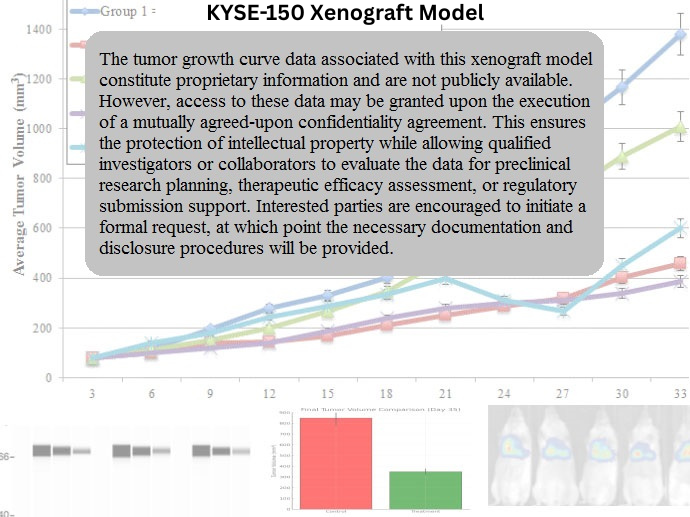
KYSE-150 xenografts are generated through subcutaneous injection of cultured tumor cells into immunocompromised mice, including athymic nude and NOD/SCID models. Tumors typically engraft within 7 to 10 days post-injection and reach volumes of 700–900 mm³ by 3 to 4 weeks. The model’s aggressive growth and consistent tumor formation support reproducible therapeutic studies, including dose-ranging and mechanistic investigations. Due to its high EGFR expression and squamous features, KYSE-150 xenografts are frequently used to evaluate tyrosine kinase inhibitors, radiation regimens, and combination treatments targeting survival signaling and apoptotic pathways. The model’s uniform histological presentation and molecular stability enable high-confidence comparisons between treatment groups.
Request a Custom Quote for KYSE-150 Xenograft ModelHistopathology and Immunohistochemical Profile
Histological evaluation of KYSE-150 xenografts reveals poorly differentiated squamous carcinoma with solid nests of tumor cells, minimal keratinization, and focal necrosis. Hematoxylin and eosin (H&E) staining shows pleomorphic nuclei, scant cytoplasm, and frequent mitotic figures, consistent with a high-grade proliferative phenotype. Immunohistochemical staining confirms strong expression of CK5/6 and nuclear p63, both characteristic of squamous differentiation. EGFR overexpression is observed at the membrane, supporting its role as a therapeutic target. SOX2 expression is nuclear, while p53 staining is diffusely positive, indicating accumulation of mutant protein. These features align with human ESCC and validate KYSE-150 as a reliable histopathological model for translational studies.
Preclinical Applications and Drug Response
The KYSE-150 xenograft model is particularly valuable in preclinical studies focused on squamous esophageal cancer. It supports testing of EGFR-targeted therapies such as gefitinib, erlotinib, and newer monoclonal antibodies. The absence of KRAS and BRAF mutations increases its sensitivity to EGFR inhibition, while TP53 dysfunction facilitates research into radiation sensitizers and DNA damage-response modulators. The model is also utilized in evaluating PI3K/AKT pathway inhibitors, apoptosis-inducing agents, and differentiation-promoting therapeutics such as SOX2-targeting compounds. Its rapid growth, epithelial stability, and well-characterized molecular background make KYSE-150 a robust platform for drug screening, biomarker development, and resistance profiling in ESCC.
Request This Model
To utilize the KYSE-150 xenograft model in your esophageal cancer research or therapeutic testing strategy, contact our scientific team to request full model specifications and receive support for customized in vivo study design.
Request a Custom Quote for KYSE-150 Xenograft Model