GP5D Xenograft Model Overview
The GP5D xenograft model originates from a human colorectal adenocarcinoma cell line derived from the primary tumor of a Japanese male patient. This model represents a moderately differentiated, epithelial-like colorectal cancer and is widely used in preclinical investigations targeting microsatellite-stable (MSS) tumors with defined genetic backgrounds. With preserved morphological integrity and well-documented resistance mechanisms, GP5D xenografts are valuable for evaluating drug responses in KRAS-mutant, TP53-mutant colorectal carcinomas. The model’s stable growth kinetics and reliable histopathological features support its application in efficacy testing, resistance pathway interrogation, and biomarker validation. GP5D is particularly suited for studies that require KRAS-driven tumorigenesis in an MSS setting without confounding RAS-pathway wild-type responsiveness.
Request a Custom Quote for GP5D Xenograft ModelBiological and Molecular Characteristics
GP5D cells display classic epithelial morphology, with strong cell–cell adhesion, membrane-localized E-cadherin, and organization into polarized monolayers in vitro. The line is characterized by a KRAS G12V mutation, a common oncogenic driver that contributes to EGFR inhibitor resistance and constitutive activation of the MAPK signaling pathway. TP53 is also mutated, reducing apoptotic competency and influencing sensitivity to DNA-damaging agents. GP5D is microsatellite stable, consistent with the majority of sporadic colorectal cancers, and expresses moderate levels of epithelial markers such as cytokeratin 20 (CK20) and carcinoembryonic antigen (CEA). Wnt/β-catenin signaling remains active, with both membrane and cytoplasmic β-catenin localization. These features make GP5D a robust model for studying pathway-selective therapeutics and resistance mechanisms in RAS-driven colorectal tumors.
| Characteristic | GP5D Cell Line Profile |
|---|---|
| Tissue of Origin | Colorectal adenocarcinoma (primary) |
| KRAS Status | Mutant (G12V) |
| TP53 Status | Mutated |
| MSI Status | Microsatellite stable (MSS) |
| Differentiation Markers | CK20, CEA, E-cadherin |
| Wnt Signaling | Active, β-catenin cytoplasmic/membranous |
In Vivo Model Development and Tumorigenicity
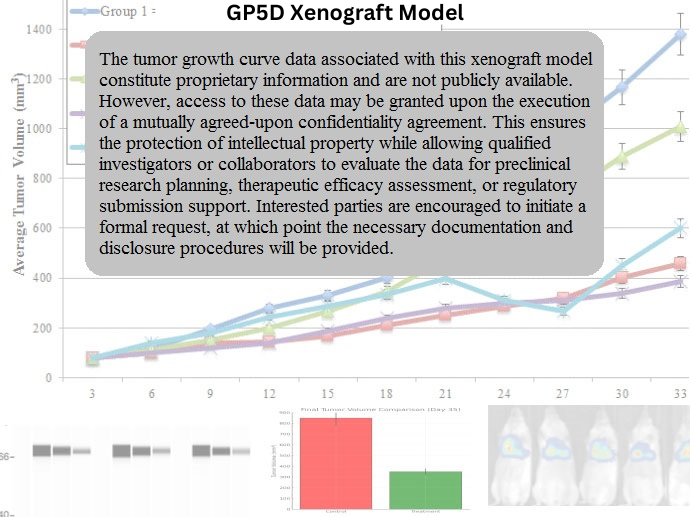
GP5D xenografts are generated via subcutaneous injection of cultured tumor cells into immunodeficient mice, typically athymic nude or NOD/SCID strains. Tumor initiation occurs within 7 to 12 days post-implantation, and tumors generally reach volumes of 700 to 900 mm³ by day 28–35. The model demonstrates consistent engraftment and moderate growth kinetics, enabling multi-arm treatment studies with minimal variability. GP5D’s KRAS mutation facilitates the modeling of resistance to upstream receptor-targeted therapies and allows for testing of small molecule inhibitors targeting downstream signaling effectors such as MEK, ERK, and PI3K. The model’s MSS background and preserved epithelial organization allow for clear interpretation of treatment response without interference from hypermutation or mismatch repair deficiencies.
Request a Custom Quote for GP5D Xenograft ModelHistopathology and Immunohistochemical Profile
Histological evaluation of GP5D xenograft tumors reveals moderately differentiated adenocarcinomas with glandular architecture, well-formed luminal spaces, and cohesive tumor cell nests. Hematoxylin and eosin (H&E) staining highlights well-polarized epithelial cells with moderate nuclear atypia and mitotic activity. Immunohistochemically, tumors stain positively for CK20 and CEA, verifying colorectal origin and differentiation. E-cadherin is strongly expressed along cell membranes, supporting epithelial integrity, while β-catenin displays both membranous and cytoplasmic localization indicative of active Wnt signaling. Nuclear accumulation of mutant p53 protein is commonly observed. The absence of mucinous differentiation and low stromal density contribute to inter-animal consistency, making the model reliable for histology-dependent evaluations and quantitative biomarker studies.
Preclinical Applications and Drug Response
The GP5D xenograft model is highly suited for preclinical testing of therapies targeting KRAS-mutant colorectal cancer. It is resistant to EGFR inhibitors, such as cetuximab and panitumumab, due to its KRAS G12V mutation, and is therefore appropriate for investigating downstream kinase inhibitors and rational combination regimens aimed at overcoming RAS-driven resistance. MEK, ERK, and PI3K inhibitors have shown efficacy in related KRAS-mutant models and are frequently tested using GP5D as a platform. The TP53 mutation offers additional value in assessing synthetic lethality-based therapies and apoptotic pathway modulation. Its MSS status allows for comparison against MSI-H models in biomarker-driven stratification strategies. With its reproducible growth and well-characterized genetic profile, GP5D is an ideal system for evaluating targeted therapies, chemoresistance, and rational drug combinations in colorectal oncology.
Request This Model
To incorporate the GP5D xenograft model into your colorectal cancer research program, contact our scientific team to request access, discuss experimental objectives, and design a study tailored to your therapeutic development goals.
Request a Custom Quote for GP5D Xenograft Model