Detroit 562 Xenograft Model Overview
The Detroit 562 xenograft model originates from a human pharyngeal squamous cell carcinoma metastasis to a lymph node, isolated from a 56-year-old female patient. As a representative of HPV-negative head and neck squamous cell carcinoma (HNSCC), this model has been widely adopted in preclinical research focused on aggressive, treatment-resistant malignancies of the upper aerodigestive tract. Detroit 562 xenografts demonstrate reliable in vivo tumor growth and reproduce the invasive phenotype and molecular hallmarks of advanced pharyngeal carcinoma, including epithelial–mesenchymal transition (EMT) potential, EGFR overexpression, and TP53 mutation. The model is extensively utilized in translational oncology research for evaluating targeted therapeutics, radiosensitizers, and immune evasion mechanisms relevant to non-HPV-associated HNSCC.
Request a Custom Quote for Detroit 562 Xenograft ModelBiological and Molecular Characteristics
Detroit 562 cells exhibit a polygonal, epithelial morphology with poorly differentiated squamous features. The model is HPV-negative and harbors a mutated TP53 gene, consistent with the molecular profile of HPV-independent head and neck cancers. It displays strong overexpression of EGFR and dysregulation of key cell cycle regulators, including p16INK4a and Rb, which contribute to uncontrolled proliferation. The cells express cytokeratins such as CK5, CK8, and CK18, as well as mesenchymal markers including vimentin under specific stimuli, indicating a capacity for EMT. Detroit 562 cells are microsatellite stable (MSS), wild-type for BRAF and KRAS, and show activation of PI3K/AKT and MAPK signaling pathways, supporting their use in pathway-specific therapeutic studies.
| Characteristic | Detroit 562 Cell Line Profile |
|---|---|
| Tissue of Origin | Pharyngeal squamous cell carcinoma (metastatic) |
| HPV Status | Negative |
| TP53 Status | Mutated |
| EGFR Status | Overexpressed |
| MSI Status | Microsatellite stable (MSS) |
| EMT Potential | Inducible (↑vimentin, ↓E-cadherin) |
In Vivo Model Development and Tumorigenicity
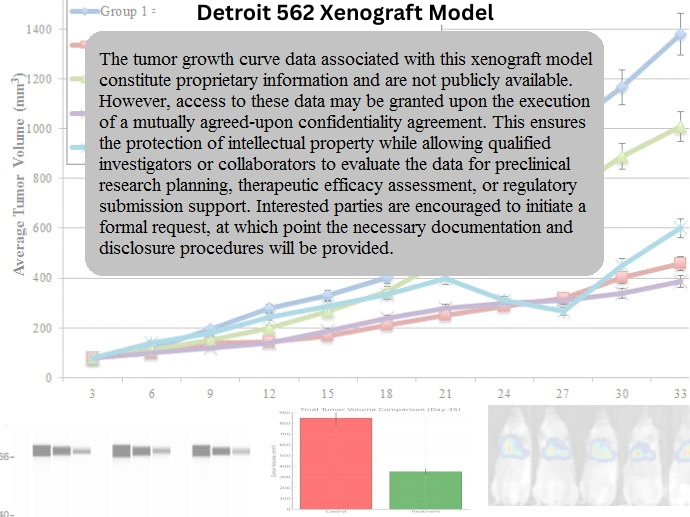
Detroit 562 xenografts are established by subcutaneous injection of cultured tumor cells into immunodeficient mice, typically NOD/SCID or athymic nude strains. Tumor nodules become palpable within 7–10 days, with rapid progression to volumes of 700–900 mm³ within 4–5 weeks. The model demonstrates consistent take rates and aggressive growth behavior, reflecting the high-grade nature of the parental tumor. Detroit 562 xenografts are well suited for testing EGFR-targeted agents, combination chemoradiotherapy protocols, and experimental inhibitors of DNA repair and EMT-related processes. Their tumorigenic profile provides a robust and reproducible platform for investigating therapeutic responses in non-HPV-related, EGFR-driven HNSCC.
Request a Custom Quote for Detroit 562 Xenograft ModelHistopathology and Immunohistochemical Profile
Histological analysis of Detroit 562 xenografts reveals poorly differentiated squamous carcinoma morphology with invasive cords and nests of tumor cells, prominent nuclear atypia, and frequent mitotic figures. Hematoxylin and eosin (H&E) staining shows limited keratinization, in line with the model’s undifferentiated status. Immunohistochemical profiling confirms strong membranous EGFR expression and nuclear p53 accumulation, alongside positive staining for epithelial markers CK5 and CK8. Mesenchymal marker expression such as vimentin is inducible, particularly under hypoxia or treatment pressure, supporting studies into tumor plasticity and therapeutic resistance. HER2 and HPV-associated markers (p16INK4a, E6/E7) are consistently absent.
Preclinical Applications and Drug Response
The Detroit 562 xenograft model is widely used in preclinical investigations of head and neck cancer therapies, particularly for HPV-negative disease. Its high EGFR expression makes it a prime candidate for testing monoclonal antibodies (e.g., cetuximab) and small-molecule tyrosine kinase inhibitors. The model also supports evaluation of standard-of-care regimens including cisplatin and radiation, along with next-generation radiosensitizers and checkpoint inhibitors in immunocompromised settings. Its inducible EMT characteristics and intact mucosal origin enhance its value in anti-metastatic and microenvironment-modulating drug studies. Detroit 562 xenografts serve as a critical platform for identifying and validating new therapeutic strategies in refractory pharyngeal squamous cell carcinoma.
Request This Model
To obtain the Detroit 562 xenograft model for use in your head and neck cancer research or targeted therapy development, contact our team for comprehensive model specifications and assistance with customized preclinical study design for HPV-negative, EGFR-driven HNSCC.
Request a Custom Quote for Detroit 562 Xenograft Model