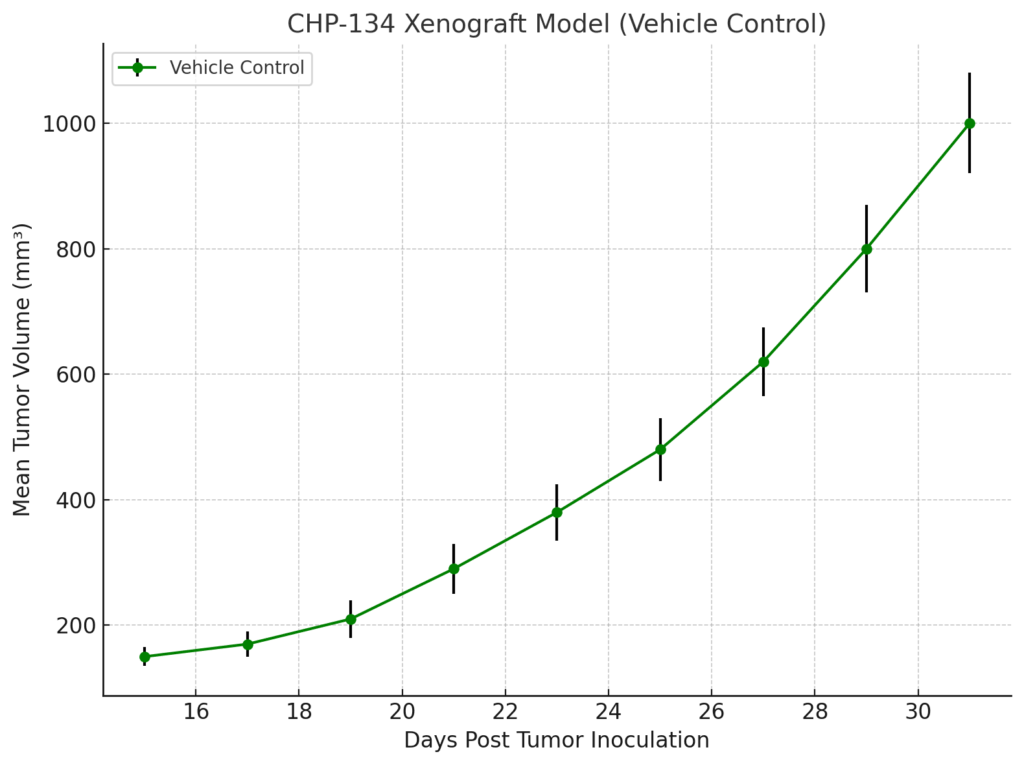
CHP-134 Xenograft Model Overview
The CHP-134 xenograft model is derived from a human cell line, CHP-134, established from a patient with non-Hodgkin’s lymphoma (NHL), specifically the anaplastic large cell lymphoma (ALCL) subtype. ALCL is a highly aggressive form of lymphoma that is characterized by large, pleomorphic tumor cells and a tendency to involve multiple extranodal sites. The CHP-134 xenograft model is particularly useful for studying the biology of ALCL, investigating tumor microenvironment interactions, and evaluating novel therapeutic strategies. This model is also of interest for understanding the molecular mechanisms of lymphoma progression, drug resistance, and metastasis, making it an important tool for preclinical research in lymphoma therapy development.
Request a Custom Quote for CHP-134 Xenograft ModelBiological and Molecular Characteristics
CHP-134 cells express a variety of markers characteristic of ALCL, including CD30, which is a key diagnostic marker for this subtype of lymphoma. The model also expresses high levels of cytokines such as IL-6 and IL-10, which contribute to tumor progression and immune evasion. Additionally, CHP-134 cells harbor specific genetic alterations, such as translocations involving the ALK gene (anaplastic lymphoma kinase), which play a significant role in the pathogenesis of ALCL. The presence of the ALK fusion protein promotes aberrant signaling pathways, including those involved in cell proliferation, survival, and resistance to chemotherapy. The CHP-134 xenograft is valuable for studying these molecular mechanisms and testing targeted therapies aimed at inhibiting the ALK pathway.
| Marker | Expression Level | Function |
|---|---|---|
| CD30 | High | Diagnostic marker for ALCL |
| ALK | High | Oncogene fusion product promoting tumor growth |
| IL-6 | Elevated | Involved in inflammation and tumor progression |
| IL-10 | Elevated | Contributes to immune evasion and survival |
In Vivo Model Development and Tumorigenicity
The CHP-134 xenograft model is typically established by subcutaneously implanting CHP-134 cells into immunocompromised mice, such as NOD/SCID or NSG mice. After implantation, the tumor grows rapidly, and the model exhibits characteristics of human ALCL, including rapid proliferation, lymph node involvement, and metastasis to distant organs such as the liver and spleen. CHP-134 xenografts are highly vascularized, providing an ideal system for studying the tumor microenvironment and evaluating the effects of anti-angiogenic treatments. The model is also useful for investigating therapies that target specific molecular pathways, such as those involving ALK, as well as for testing new immunotherapies, including monoclonal antibodies and immune checkpoint inhibitors. In addition to subcutaneous implantation, orthotopic models of CHP-134 can be established by implanting cells into the lymph nodes or other relevant tissues to more closely replicate the clinical features of ALCL.
Request a Custom Quote for CHP-134 Xenograft ModelHistopathology and Immunohistochemical Profile
Histopathological examination of CHP-134 xenografts reveals the characteristic features of anaplastic large cell lymphoma, with large, pleomorphic tumor cells that exhibit irregular nuclear morphology and prominent nucleoli. Immunohistochemical staining shows high expression of CD30, confirming the diagnosis of ALCL. Additionally, the ALK fusion protein is expressed in the majority of tumor cells, further validating the model as representative of ALK-positive ALCL. The tumors also show significant vascularization, assessed through markers such as CD31, which are indicative of the rapid tumor growth and angiogenesis. Furthermore, cytokines like IL-6 and IL-10 are detected in the tumor microenvironment, which plays a critical role in immune suppression and tumor survival. The immunohistochemical profile of CHP-134 xenografts makes them highly suitable for evaluating new therapeutic strategies, including targeted therapies and immunomodulatory agents.
Preclinical Applications and Drug Response
The CHP-134 xenograft model is extensively used in preclinical studies to evaluate the efficacy of novel therapeutic agents for ALCL. One of the most promising therapeutic targets in ALCL is the ALK pathway, and the CHP-134 model is highly valuable for testing small molecule inhibitors of ALK, such as crizotinib, which has shown efficacy in ALK-positive cancers. In addition to ALK inhibitors, the model is used to evaluate the potential of immunotherapies, including monoclonal antibodies targeting CD30, such as brentuximab vedotin, which has been approved for the treatment of ALCL. The CHP-134 xenograft is also utilized to test combination therapies, including chemotherapy agents and immunotherapy, as well as novel agents that target the tumor microenvironment or angiogenesis. Furthermore, the model provides a platform for studying immune checkpoint inhibitors that may enhance anti-tumor immunity in ALCL.
Request This Model
To request the CHP-134 xenograft model for your preclinical studies, please use the form below. A customized quote and additional model specifications will be provided upon inquiry.
Request a Custom Quote for CHP-134 Xenograft Model