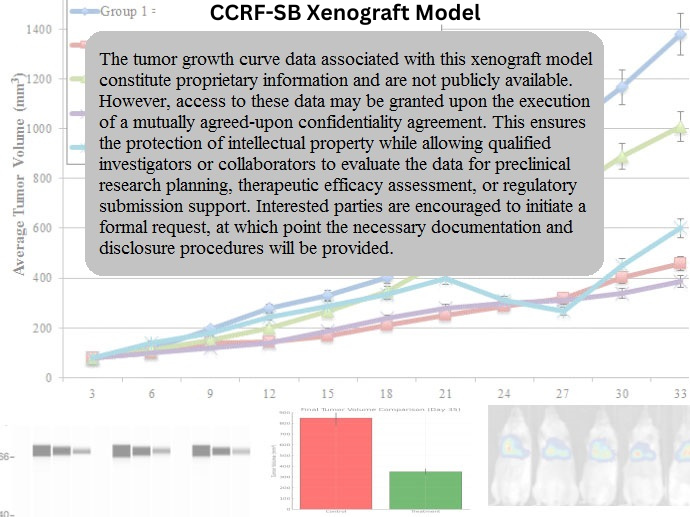
CCRF-SB Xenograft Model Overview
The CCRF-SB xenograft model is derived from the CCRF-SB cell line, which originates from the peripheral blood of a pediatric patient diagnosed with acute lymphoblastic leukemia (ALL), specifically the B-cell precursor subtype. This model is widely used in preclinical hematologic oncology research due to its ability to replicate features of high-risk childhood B-ALL, including rapid in vivo progression, high proliferation rates, and bone marrow infiltration. The CCRF-SB xenograft provides a valuable in vivo system for studying leukemic dissemination, drug resistance mechanisms, and evaluating the efficacy of cytotoxic and targeted therapies within the B-cell lineage of ALL.
Request a Custom Quote for CCRF‑SB Xenograft ModelBiological and Molecular Characteristics
CCRF-SB cells exhibit a pro-B cell phenotype, expressing CD19 and CD10, with weak or absent expression of more mature B-cell markers such as CD20. The cells are negative for surface immunoglobulins and express markers associated with early B-cell lineage differentiation. They carry multiple chromosomal abnormalities, including structural aberrations commonly observed in pediatric B-ALL. CCRF-SB cells demonstrate high proliferative potential and a gene expression profile that supports survival and chemoresistance, including elevated levels of BCL2 and other anti-apoptotic factors. These attributes make the model highly suitable for exploring mechanisms of treatment failure and testing agents aimed at overcoming minimal residual disease.
| Characteristic | Description |
|---|---|
| Disease Origin | Pediatric B-cell precursor acute lymphoblastic leukemia |
| Immunophenotype | CD19+, CD10+, CD34+, TdT+, CD20–, sIg– |
| Growth Characteristics | High proliferative index, disseminated leukemia model |
| Genetic Features | Complex karyotype with multiple structural aberrations |
| Therapeutic Relevance | Cytotoxic agents, BCL2 inhibitors, anti-CD19/20 immunotherapies |
In Vivo Model Development and Tumorigenicity
The CCRF-SB xenograft is established by intravenous or intrafemoral injection of tumor cells into highly immunodeficient mouse strains such as NSG mice. When introduced systemically, CCRF-SB cells home to hematopoietic compartments including bone marrow, spleen, and liver, replicating the pattern of leukemic infiltration seen in human ALL. Tumor burden can be monitored by peripheral blood analysis, bioluminescent imaging (in labeled variants), or flow cytometry of human CD45+ cells in murine tissues. This disseminated xenograft model allows for dynamic evaluation of leukemia progression and therapeutic response in relevant hematopoietic niches.
Request a Custom Quote for CCRF‑SB Xenograft ModelHistopathology and Immunohistochemical Profile
Histologic sections from CCRF-SB xenografted mice reveal extensive infiltration of human lymphoblasts in bone marrow, spleen, and liver. The leukemic cells are small to medium in size with high nuclear-to-cytoplasmic ratios, fine chromatin, and indistinct nucleoli. Immunohistochemical staining confirms expression of CD19 and CD10 in affected tissues, with widespread positivity for human CD45 and terminal deoxynucleotidyl transferase (TdT), consistent with immature B-cell identity. Ki-67 proliferation indices frequently exceed 80%, reflecting the aggressive growth kinetics of the model. These findings affirm the model’s translational relevance to pediatric B-ALL.
Preclinical Applications and Drug Response
The CCRF-SB xenograft model is a key tool for evaluating chemotherapy regimens (e.g., vincristine, dexamethasone, asparaginase), as well as investigational agents targeting apoptotic regulators (e.g., BCL2 inhibitors like venetoclax) and immune markers such as CD19. It is also used in assessing the in vivo behavior of antibody-drug conjugates, CAR-T cells, and bispecific T-cell engagers (BiTEs). The model’s systemic disease progression, bone marrow involvement, and chemoresistant properties make it ideal for preclinical studies focused on relapse, persistence of leukemic stem cells, and immune evasion. As such, the CCRF-SB xenograft remains an indispensable component of ALL research pipelines.
Request This Model
To request the CCRF-SB xenograft model for your preclinical studies, please use the form below. A customized quote and additional model specifications will be provided upon inquiry.
Request a Custom Quote for CCRF‑SB Xenograft Model