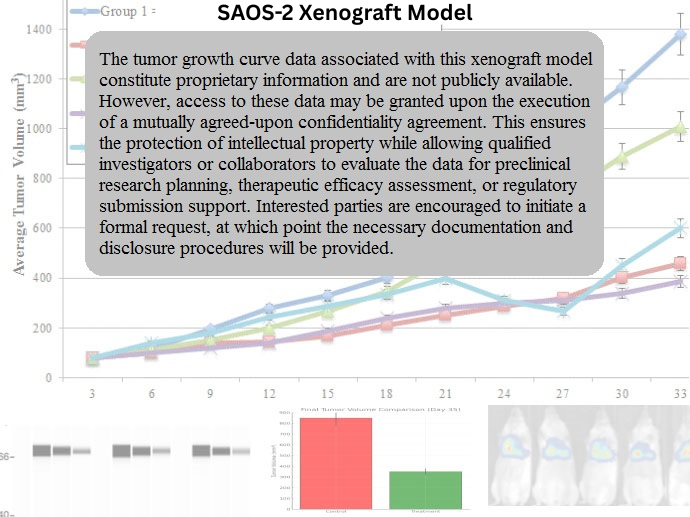
SAOS-2 Xenograft Model Overview
The SAOS-2 xenograft model is derived from a human osteosarcoma cell line, SAOS-2, which was established from a primary tumor in the tibia of a 6-year-old boy with osteosarcoma. Osteosarcoma is the most common type of bone cancer, often affecting children and adolescents, and is characterized by aggressive growth, frequent metastasis to the lungs, and resistance to conventional therapies. The SAOS-2 xenograft model is widely used in preclinical studies to investigate the biology of osteosarcoma, including tumor progression, metastasis, and therapeutic resistance. This model is especially valuable for evaluating novel therapeutic agents, including chemotherapy, targeted therapies, and immunotherapies for osteosarcoma.
Request a Custom Quote for SAOS-2 Xenograft ModelBiological and Molecular Characteristics
SAOS-2 cells are characterized by their mesenchymal origin and ability to produce osteoid, a hallmark of osteosarcoma that contributes to bone matrix formation. Unlike other osteosarcoma cell lines, SAOS-2 cells lack functional p53 (a tumor suppressor gene), which plays a critical role in cell cycle regulation and apoptosis. The loss of p53 function in SAOS-2 cells contributes to their resistance to chemotherapy and uncontrolled cell proliferation. Additionally, SAOS-2 cells exhibit dysregulated signaling pathways, including the PI3K/AKT pathway, which promotes tumor cell survival, proliferation, and invasion. These molecular features make the SAOS-2 xenograft model an ideal platform for studying drug resistance mechanisms and evaluating new therapies aimed at overcoming these challenges.
| Marker | Expression Level | Function |
|---|---|---|
| Osteoid | High | Bone matrix produced by tumor cells |
| p53 | Mutated | Tumor suppressor gene involved in apoptosis |
| PI3K/AKT pathway | Dysregulated | Promotes cell survival and proliferation |
In Vivo Model Development and Tumorigenicity
The SAOS-2 xenograft model is typically established by subcutaneously implanting SAOS-2 cells into immunocompromised mice, such as NOD/SCID or NSG mice, which lack functional T and B cells. Upon implantation, the cells form solid tumors that replicate the characteristic features of osteosarcoma, including high cellularity, osteoid production, and significant vascularization. SAOS-2 xenografts also show areas of necrosis, indicative of rapid tumor growth. Given their ability to produce osteoid, these tumors mimic the bone matrix formation seen in human osteosarcoma, making them particularly useful for studying therapies that target bone-related tumor progression.
In addition to subcutaneous implantation, orthotopic models of SAOS-2 can be established by implanting the cells directly into the bone of immunocompromised mice. This orthotopic model allows for more clinically relevant studies of tumor growth, local invasion, and metastasis. The ability of SAOS-2 cells to metastasize, particularly to the lungs, provides a valuable system for testing therapies that aim to prevent or treat metastatic disease in osteosarcoma.
Request a Custom Quote for SAOS-2 Xenograft ModelHistopathology and Immunohistochemical Profile
Histopathological analysis of SAOS-2 xenografts reveals the characteristic features of osteosarcoma, including irregular glandular structures, production of osteoid, and high mitotic activity. The tumors are composed of pleomorphic cells with abundant cytoplasm and irregular nuclear morphology, indicative of rapid cell division. Immunohistochemical staining of SAOS-2 xenografts shows strong expression of osteoid, confirming the bone matrix production characteristic of osteosarcoma. Additionally, high levels of phosphorylated AKT are observed, indicating the activation of the PI3K/AKT signaling pathway, which contributes to tumor growth and survival. CD31 staining reveals significant vascularization, highlighting the tumor’s reliance on angiogenesis for rapid growth.
Preclinical Applications and Drug Response
The SAOS-2 xenograft model is widely used to evaluate the efficacy of various therapeutic agents for osteosarcoma, including chemotherapy drugs such as methotrexate, doxorubicin, and cisplatin, which are standard treatments for osteosarcoma. Given the model’s potential for developing resistance to chemotherapy, it is highly useful for investigating chemotherapy resistance mechanisms and for testing new drugs aimed at overcoming this resistance. The model is also valuable for evaluating targeted therapies, particularly those that inhibit key signaling pathways, such as the PI3K/AKT pathway, which is frequently dysregulated in osteosarcoma.
In addition to chemotherapy and targeted therapies, the SAOS-2 xenograft model is increasingly used to evaluate the potential of immunotherapies, including immune checkpoint inhibitors, which have shown promise in treating other cancers and are now being explored for osteosarcoma. The model’s ability to replicate the aggressive nature of osteosarcoma, including osteoid production, metastatic potential, and resistance to chemotherapy, makes it an ideal system for investigating new treatment strategies. Furthermore, the ability of SAOS-2 cells to metastasize to the lungs provides an excellent platform for testing therapies that target metastatic disease, which is a critical challenge in osteosarcoma treatment.
Request This Model
To request the SAOS-2 xenograft model for your preclinical studies, please use the form below. A customized quote and additional model specifications will be provided upon inquiry.
Request a Custom Quote for SAOS-2 Xenograft Model