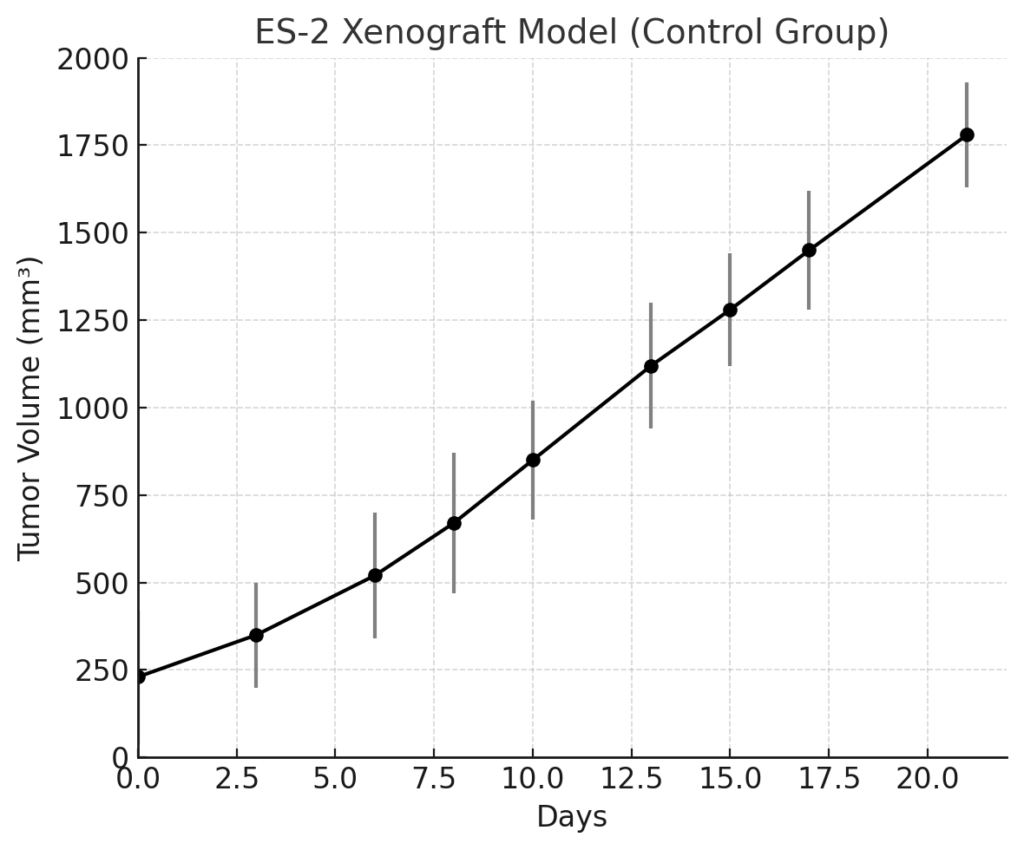
ES-2 Xenograft Model Overview
The ES-2 xenograft model is derived from a human ovarian clear cell carcinoma (OCCC) cell line, ES-2, which was established from a primary ovarian tumor. Ovarian clear cell carcinoma is a rare and aggressive subtype of ovarian cancer that is often resistant to conventional chemotherapy and associated with poor prognosis. The ES-2 xenograft model is widely used for preclinical research to study the biology of OCCC, its metastatic behavior, and to evaluate novel therapeutic strategies. This model is particularly valuable for testing drugs that aim to target the unique molecular characteristics of clear cell carcinoma and for investigating mechanisms of resistance to platinum-based chemotherapy and other treatment regimens.
Request a Custom Quote for ES-2 Xenograft ModelBiological and Molecular Characteristics
ES-2 cells exhibit characteristics typical of ovarian clear cell carcinoma, including the expression of epithelial markers such as cytokeratin, epithelial membrane antigen (EMA), and HNF-1β (hepatocyte nuclear factor-1β). These cells are also known to overexpress various genes involved in cell survival and proliferation, such as VEGF (vascular endothelial growth factor), which contributes to angiogenesis and tumor growth. Additionally, ES-2 cells harbor mutations in key tumor suppressor genes, including TP53 and ARID1A, both of which are frequently altered in clear cell carcinoma and contribute to tumor progression and resistance to therapy. The ES-2 xenograft model is particularly useful for testing therapies aimed at overcoming drug resistance, including those targeting the PI3K/AKT/mTOR signaling pathway, which is often dysregulated in OCCC.
| Marker | Expression Level | Function |
|---|---|---|
| Cytokeratin | High | Epithelial cell marker |
| EMA | High | Epithelial membrane antigen |
| HNF-1β | High | Transcription factor involved in cell growth |
| VEGF | High | Angiogenesis factor promoting tumor growth |
| TP53 | Mutated | Tumor suppressor gene involved in apoptosis |
In Vivo Model Development and Tumorigenicity
The ES-2 xenograft model is typically established by implanting ES-2 cells into immunocompromised mice, such as NOD/SCID or NSG mice, which lack functional T and B cells. Upon implantation, the cells form tumors that mimic the growth and metastatic patterns of human ovarian clear cell carcinoma. The tumors are highly vascularized, reflecting the angiogenic properties of the model, and often show significant necrosis due to rapid tumor growth. ES-2 xenografts are highly aggressive and capable of metastasizing to distant organs, including the liver, lung, and peritoneal cavity, making them a useful system for studying the metastatic behavior of OCCC. The model is also used to investigate the effects of therapies targeting angiogenesis, chemotherapy, and novel immunotherapeutic agents.
In addition to subcutaneous implantation, the ES-2 model can be established through orthotopic injection, where the cells are implanted directly into the ovarian bursa of immunocompromised mice. This approach allows for the replication of the natural site of tumor growth and more accurately mimics the clinical progression and metastasis of ovarian clear cell carcinoma.
Request a Custom Quote for ES-2 Xenograft ModelHistopathology and Immunohistochemical Profile
Histopathological analysis of ES-2 xenografts reveals tumors with a distinct morphology, characterized by large, pleomorphic cells with abundant clear cytoplasm, a hallmark feature of ovarian clear cell carcinoma. The tumors also display areas of necrosis and cystic degeneration, often seen in rapidly growing tumors. Immunohistochemical staining of ES-2 xenografts shows strong expression of cytokeratin, EMA, and HNF-1β, confirming the epithelial origin of the tumor. Additionally, the tumors exhibit elevated levels of VEGF, which is associated with the angiogenesis observed in the model. The presence of markers such as CD31 highlights the high vascularity of the tumors, further validating the model’s use for evaluating anti-angiogenic therapies. Staining for markers of tumor progression, such as Ki-67, indicates the high proliferative capacity of the ES-2 xenografts, making them an ideal platform for testing new therapies aimed at halting tumor growth.
Preclinical Applications and Drug Response
The ES-2 xenograft model is widely used to evaluate the efficacy of various therapeutic agents for ovarian clear cell carcinoma. Given the model’s resistance to standard platinum-based chemotherapy, it is particularly valuable for testing combination therapies designed to overcome drug resistance. The model is also useful for studying targeted therapies, particularly those aimed at dysregulated signaling pathways such as the PI3K/AKT/mTOR and VEGF/VEGFR pathways, which are frequently altered in ovarian clear cell carcinoma. Additionally, ES-2 xenografts are employed to assess the efficacy of novel immunotherapies, including immune checkpoint inhibitors and monoclonal antibodies targeting key molecules involved in tumor progression, such as VEGF.
The ES-2 model is also utilized to investigate agents that target the unique molecular features of OCCC, such as inhibitors of ARID1A and TP53 mutations. Furthermore, this model serves as an excellent system for studying the interactions between the tumor and the surrounding stromal cells, which play a key role in the progression and drug resistance of ovarian clear cell carcinoma.
Request This Model
To request the ES-2 xenograft model for your preclinical studies, please use the form below. A customized quote and additional model specifications will be provided upon inquiry.
Request a Custom Quote for ES-2 Xenograft Model