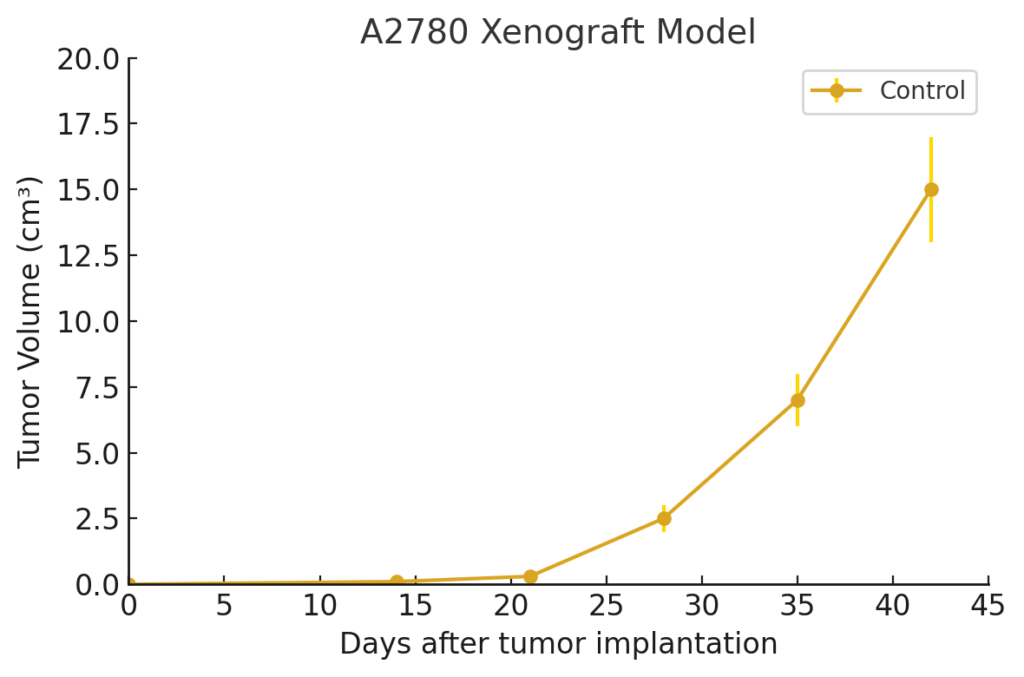
A2780 Xenograft Model Overview
The A2780 xenograft model is derived from a human ovarian carcinoma cell line, established from a patient with an advanced-stage serous ovarian cancer. Ovarian cancer remains one of the most challenging malignancies due to its high mortality rate, late-stage diagnosis, and tendency to develop resistance to chemotherapy. The A2780 xenograft model is widely used for preclinical research to study the molecular mechanisms of ovarian cancer, evaluate novel therapeutic strategies, and investigate mechanisms of drug resistance. This model is particularly valuable for testing chemotherapy agents, targeted therapies, and immunotherapies, given its high sensitivity to cisplatin and its ability to form robust, vascularized tumors when implanted in immunocompromised mice.
Request a Custom Quote for A2780 Xenograft ModelBiological and Molecular Characteristics
The A2780 cell line is known for its epithelial origin and expresses various surface markers associated with ovarian cancer, including the epithelial marker EpCAM (epithelial cell adhesion molecule) and the hormone receptor estrogen receptor (ER). These cells are also characterized by their sensitivity to platinum-based chemotherapies, particularly cisplatin, which makes the A2780 xenograft model useful for evaluating new platinum-based agents or combination treatments. A notable feature of A2780 cells is the presence of mutations in DNA repair pathways, such as BRCA1/2, which contribute to the model’s sensitivity to platinum-based therapies but also to the development of resistance over time. The model also expresses high levels of the multidrug resistance protein 1 (MDR1), which can contribute to resistance to a variety of chemotherapy drugs, making it useful for testing drugs that aim to overcome such resistance mechanisms.
| Marker | Expression Level | Function |
|---|---|---|
| EpCAM | High | Epithelial cell marker |
| Estrogen Receptor | High | Hormone receptor involved in cell growth |
| MDR1 | High | Multidrug resistance protein associated with chemotherapy resistance |
| BRCA1/2 | Mutated | Tumor suppressor genes involved in DNA repair |
In Vivo Model Development and Tumorigenicity
The A2780 xenograft model is typically established by subcutaneously injecting A2780 cells into immunocompromised mice, such as NOD/SCID or NSG mice. Upon implantation, the A2780 cells rapidly proliferate, forming well-vascularized tumors that resemble the human ovarian carcinoma in terms of histology and tumor progression. The tumors formed in vivo exhibit the classic features of ovarian carcinoma, including solid and cystic regions, necrotic areas, and extensive vascularization, which is indicative of rapid tumor growth. The model is frequently used to evaluate new chemotherapy agents, including platinum-based therapies such as cisplatin and carboplatin, and to investigate the development of drug resistance.
Additionally, the A2780 model can be used to evaluate therapies targeting the tumor microenvironment, including anti-angiogenic agents and immunotherapies. The tumor’s responsiveness to cisplatin also makes the model suitable for exploring combination therapies that aim to overcome resistance or enhance chemotherapy effectiveness. In some cases, orthotopic implantation of A2780 cells into the ovarian cavity of mice is performed, mimicking the natural site of tumor growth and metastasis, thereby enabling a more clinically relevant study of tumor dissemination and therapeutic intervention.
Request a Custom Quote for A2780 Xenograft ModelHistopathology and Immunohistochemical Profile
Histopathological examination of A2780 xenografts reveals tumors with distinct areas of solid and cystic growth, mimicking the heterogeneous nature of ovarian carcinoma. The tumors are composed of large, pleomorphic cells with high mitotic activity and nuclear atypia, indicative of malignancy. Immunohistochemical staining of A2780 xenografts shows high expression of EpCAM, which is commonly used to identify epithelial tumor cells, and estrogen receptor (ER), consistent with the hormone sensitivity of the model. Additionally, the tumors show high levels of multidrug resistance protein (MDR1), indicating a potential mechanism of chemotherapy resistance. Staining for Ki-67 reveals high proliferative activity in the tumors, further validating the aggressive nature of the model. The presence of vascular structures within the tumors can be evaluated using markers such as CD31, which highlights the development of new blood vessels in the rapidly growing tumors.
Preclinical Applications and Drug Response
The A2780 xenograft model is widely used in preclinical studies to evaluate the efficacy of a variety of chemotherapy agents, particularly platinum-based drugs like cisplatin and carboplatin. The model’s sensitivity to these drugs makes it an essential tool for testing combination therapies aimed at overcoming chemotherapy resistance or improving therapeutic outcomes. The A2780 model is also valuable for investigating targeted therapies, including those aimed at DNA repair pathways (e.g., PARP inhibitors) or other molecular targets relevant to ovarian carcinoma.
In addition to chemotherapy and targeted therapies, the A2780 xenograft model is increasingly used to test immunotherapies, including checkpoint inhibitors and vaccines, which have shown promise in clinical trials for ovarian cancer. The model’s ability to replicate the tumor microenvironment and its responsiveness to cisplatin make it a useful system for evaluating new drugs in preclinical research, particularly those that aim to enhance the immune response or improve the efficacy of existing therapies.
Request This Model
To request the A2780 xenograft model for your preclinical studies, please use the form below. A customized quote and additional model specifications will be provided upon inquiry.
Request a Custom Quote for A2780 Xenograft Model