NCI-H2110 Xenograft Model Overview
The NCI-H2110 xenograft model is derived from a human non-small cell lung cancer (NSCLC) of the adenocarcinoma subtype and is widely utilized for preclinical studies involving growth factor signaling, hormone receptor modulation, and therapeutic resistance in lung cancer. Originating from a female patient, the NCI-H2110 cell line is distinguished by high expression of estrogen receptor beta (ERβ) and neuroendocrine differentiation markers, making it a rare and valuable model for investigating the interplay between hormonal signaling and oncogenesis in pulmonary adenocarcinomas. The model demonstrates consistent tumorigenicity when implanted subcutaneously into immunodeficient mice and supports in vivo analysis of pathway inhibitors, hormone modulators, and combination regimens involving endocrine and targeted therapies.
Request a Custom Quote for NCI‑H2110 Xenograft ModelBiological and Molecular Characteristics
NCI-H2110 cells are characterized by a wild-type EGFR and KRAS profile, with inactivation of TP53 and moderate amplification of ERBB family members. A defining feature of this model is the high expression of estrogen receptor beta (ESR2), which is relatively uncommon in lung adenocarcinoma but confers distinct responsiveness to hormonal modulators and provides insight into estrogenic regulation of tumor growth. The cell line also expresses neuroendocrine markers such as neuron-specific enolase (NSE) and chromogranin A, indicating partial lineage plasticity. PD-L1 expression is typically low, and MHC class I expression is preserved, supporting its use in immunomodulatory and hormone-immunotherapy crossover studies.
| Characteristic | Description |
|---|---|
| Tissue Origin | Human lung adenocarcinoma |
| Key Alterations | TP53 inactivation; ESR2 overexpression |
| Mutation Status | EGFR/KRAS wild-type |
| Lineage Markers | ERβ+, NSE+, Chromogranin A+, CK7+ |
| Therapeutic Relevance | Hormone-responsive NSCLC, neuroendocrine-hybrid tumors |
In Vivo Model Development and Tumorigenicity
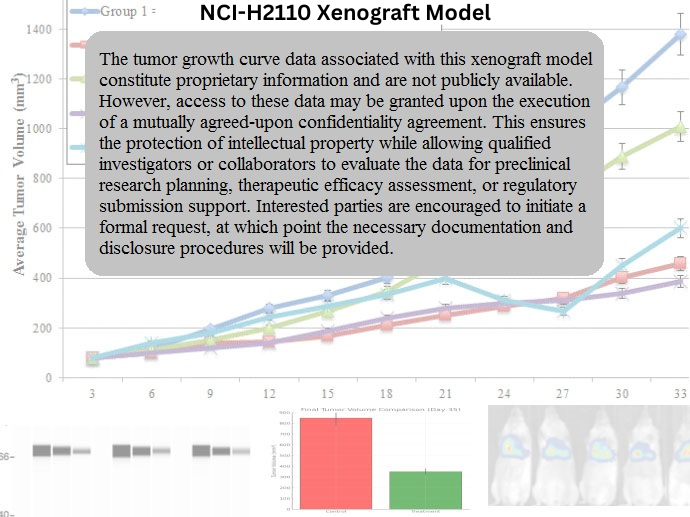
The NCI-H2110 xenograft model is established through subcutaneous implantation of tumor cells into immunodeficient mice such as athymic nude or NOD/SCID strains. Tumor nodules typically become palpable within 10–14 days and grow to volumes suitable for therapeutic evaluation (300–500 mm³) within four to six weeks. The model shows high tumor take rates and stable growth kinetics, making it appropriate for pharmacokinetic and pharmacodynamic (PK/PD) studies, drug response profiling, and hormone-targeting therapy trials. Due to its unique expression of ERβ and neuroendocrine features, it is particularly well suited for evaluating endocrine therapies (e.g., fulvestrant or tamoxifen) and combined regimens involving PI3K or MAPK pathway inhibitors.
Request a Custom Quote for NCI‑H2110 Xenograft ModelHistopathology and Immunohistochemical Profile
Histologic analysis of NCI-H2110 xenografts reveals moderately differentiated adenocarcinoma with focal glandular organization, neuroendocrine-like clusters, and high nuclear-to-cytoplasmic ratios. Hematoxylin and eosin staining shows abundant mitotic activity and moderate stromal infiltration. Immunohistochemical evaluation demonstrates strong positivity for cytokeratin 7 and estrogen receptor beta, along with diffuse expression of neuron-specific enolase. Chromogranin A staining is patchy but detectable, reinforcing the model’s hybrid lineage identity. Ki-67 proliferation index commonly exceeds 60%, supporting its relevance for evaluating proliferation-targeted therapies. PD-L1 expression remains minimal, while MHC I expression is moderate, enabling translational studies on hormone–immune axis crosstalk.
Preclinical Applications and Drug Response
The NCI-H2110 xenograft model is highly useful for investigating estrogen signaling in lung cancer and for evaluating therapies that exploit ERβ-mediated growth regulation. It has demonstrated sensitivity to estrogen receptor antagonists and selective estrogen receptor modulators (SERMs), particularly when used in conjunction with PI3K/AKT or MEK inhibitors. The model also supports studies of neuroendocrine differentiation and treatment-induced lineage plasticity, especially in the context of therapy resistance. Its wild-type EGFR and KRAS background makes it ideal for evaluating pathway-specific inhibitors without confounding driver mutation effects. Additionally, the model has been explored in immune-hormonal combination therapy studies, particularly those involving immune checkpoint blockade with epigenetic or endocrine sensitizers.
Request This Model
To request the NCI-H2110 xenograft model for your preclinical studies, please use the form below. A customized quote and additional model specifications will be provided upon inquiry.
Request a Custom Quote for NCI‑H2110 Xenograft Model