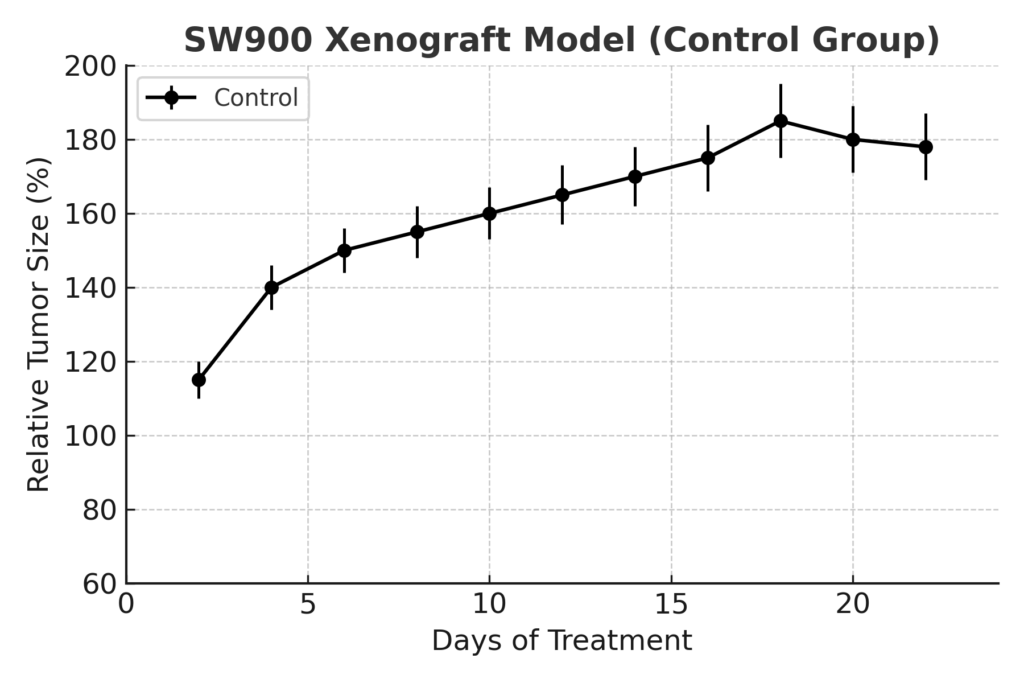
SW900 Xenograft Model Overview
The SW900 xenograft model is derived from a human squamous cell carcinoma of the lung and provides a well-characterized system for studying non-small cell lung cancer (NSCLC) with a squamous histological subtype. Established from a male patient, the SW900 cell line exhibits high tumorigenic capacity and retains typical squamous morphology when implanted subcutaneously into immunodeficient mice. This model is frequently used in preclinical drug development for evaluating agents targeting squamous-specific signaling pathways, chemotherapy resistance mechanisms, and DNA damage responses. Given its reproducible growth kinetics and defined histological profile, the SW900 xenograft model supports both monotherapy and combination studies in drug-resistant NSCLC.
Request a Custom Quote for SW900 Xenograft ModelBiological and Molecular Characteristics
SW900 cells possess several defining molecular features, including TP53 inactivation and wild-type status for EGFR, KRAS, and ALK. The absence of dominant oncogenic drivers renders this model ideal for evaluating non-targeted agents and therapies addressing loss-of-function mutations. The cell line expresses markers typical of squamous cell differentiation, such as cytokeratin 5/6 and p63, and lacks glandular epithelial markers like TTF-1. PD-L1 expression is low to moderate, while MHC class I expression remains intact, enabling immune-resistance modeling. The genomic and transcriptomic profiles suggest heightened vulnerability to agents that disrupt mitosis, DNA repair, and oxidative stress regulation.
| Characteristic | Description |
|---|---|
| Tissue Origin | Human lung squamous cell carcinoma |
| Key Alterations | TP53 inactivation; EGFR/KRAS/ALK wild-type |
| Phenotype | Squamous epithelial, adherent |
| Immunomarkers | CK5/6+, p63+, TTF-1−, PD-L1 (low-moderate), MHC I+ |
| Therapeutic Relevance | Squamous NSCLC, DNA damage response, chemoresistance |
In Vivo Model Development and Tumorigenicity
The SW900 xenograft model is established by subcutaneous injection into immunocompromised mice, including NOD/SCID or athymic nude strains. Tumor formation occurs within two weeks, with tumors reaching 300–500 mm³ within 5–6 weeks post-injection. The model shows a high tumor take rate and consistent growth, making it ideal for evaluating cytotoxic agents, tumor metabolism modulators, and combination regimens involving DNA-damaging agents or checkpoint inhibitors. The predictable tumor kinetics and robust growth allow for longitudinal monitoring, tissue sampling, and pharmacodynamic analyses across varied treatment timelines.
Request a Custom Quote for SW900 Xenograft ModelHistopathology and Immunohistochemical Profile
Histologically, SW900-derived tumors exhibit classical squamous differentiation with polygonal tumor cells, intercellular bridges, and keratin pearl formation in well-developed regions. Hematoxylin and eosin staining reveals a high nuclear-to-cytoplasmic ratio and frequent mitotic figures. Immunohistochemistry demonstrates strong positivity for squamous markers cytokeratin 5/6 and p63, with negative staining for adenocarcinoma markers such as TTF-1. Ki-67 labeling typically exceeds 60%, indicative of a highly proliferative tumor phenotype. TP53 staining reveals aberrant nuclear accumulation, consistent with mutation-induced dysfunction. PD-L1 expression is moderate and focal, enabling studies of immune modulation and checkpoint blockade enhancement.
Preclinical Applications and Drug Response
The SW900 xenograft model is extensively used in evaluating therapies for squamous NSCLC, especially those that bypass the need for known oncogenic drivers. It is responsive to platinum-based chemotherapies and taxanes, and is frequently used to study mechanisms of acquired resistance. Inhibitors of DNA damage repair pathways, such as PARP and ATR inhibitors, as well as cell cycle regulators including CDK and aurora kinase inhibitors, have demonstrated activity in this model. The moderate PD-L1 expression and retained MHC class I profile support investigations into immunomodulatory agents and dual-modality immunotherapy. The model is also employed in nanoparticle delivery research, antibody–drug conjugate studies, and radiation sensitization protocols targeting squamous tumor biology.
Request This Model
To request the SW900 xenograft model for your preclinical studies, please use the form below. A customized quote and additional model specifications will be provided upon inquiry.
Request a Custom Quote for SW900 Xenograft Model