NCI-H520 Xenograft Model Overview
The NCI-H520 xenograft model is derived from a human squamous cell carcinoma (SCC) of the lung and is a widely used preclinical system for studying non-small cell lung cancer (NSCLC) of squamous histology. Originally isolated from a 64-year-old male patient, this cell line is characterized by its keratinizing phenotype and absence of activating mutations in common oncogenes such as EGFR or KRAS. Instead, NCI-H520 harbors TP53 mutations and other alterations typical of SCC, making it especially relevant for drug development programs targeting non-adenocarcinoma NSCLC. The model is extensively used in therapeutic screening, tumor differentiation research, and evaluation of response to DNA-damaging agents and epigenetic modulators.
Request a Custom Quote for NCI‑H520 Xenograft ModelBiological and Molecular Characteristics
NCI-H520 cells display a polygonal, epithelial morphology with features typical of squamous differentiation. The cell line harbors a homozygous TP53 mutation, resulting in loss of p53 function, and shows amplification of chromosome regions associated with cell cycle dysregulation, including gains in CCND1 and FGFR1 loci. Unlike many adenocarcinoma-derived models, NCI-H520 is wild-type for KRAS and EGFR, allowing the assessment of therapies independent of those canonical oncogenic drivers. Biomarkers frequently expressed include cytokeratin 5/6, p63, and involucrin, reflecting a squamous lineage and a differentiated phenotype. This molecular profile supports its application in modeling squamous-specific pathways and therapeutic resistance mechanisms.
| Characteristic | NCI-H520 Cell Line Profile |
|---|---|
| Cancer Type | Non-small cell lung cancer (squamous cell carcinoma) |
| TP53 Status | Mutant (loss of function) |
| EGFR/KRAS Status | Wild-type |
| Marker Expression | Cytokeratin 5/6⁺, p63⁺, Involucrin⁺ |
| Differentiation Status | Moderately to well-differentiated squamous |
In Vivo Model Development and Tumorigenicity
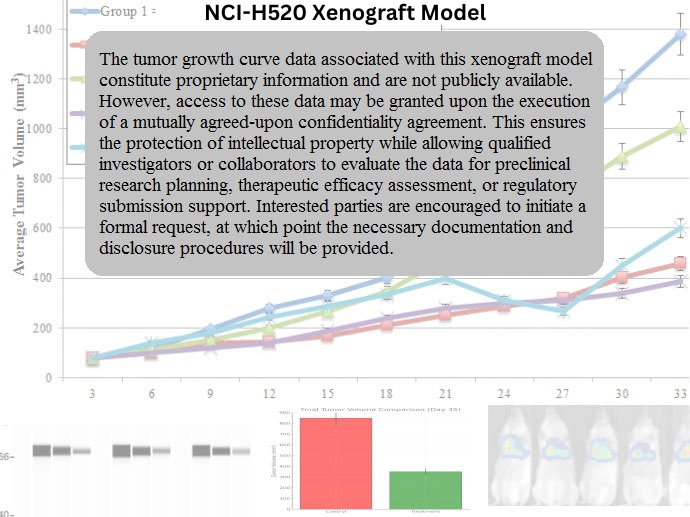
NCI-H520 xenografts are typically generated through subcutaneous injection of cultured tumor cells into immunodeficient mice, such as athymic nude or NOD/SCID strains. Tumors form within 7–10 days post-inoculation and generally reach volumes of 800–900 mm³ within 5–6 weeks. This model is characterized by a consistent growth profile, high engraftment rates, and reproducible tumor histology, making it appropriate for high-throughput pharmacologic screening and longitudinal therapeutic studies. NCI-H520’s relatively uniform tumor growth kinetics support controlled experimental timelines and facilitate the evaluation of cytotoxic and differentiation-inducing agents in vivo.
Request a Custom Quote for NCI‑H520 Xenograft ModelHistopathology and Immunohistochemical Profile
Histological analysis of NCI-H520 xenograft tumors reveals squamous differentiation with keratin pearl formation, intercellular bridges, and areas of dense eosinophilic cytoplasm. Tumor sections demonstrate prominent cellular stratification and keratinization, consistent with human lung squamous cell carcinoma. Immunohistochemical profiling confirms strong expression of squamous epithelial markers, including cytokeratin 5/6 and p63, with variable Ki-67 staining indicative of moderate proliferative activity. The tumors lack glandular features, aligning with the squamous phenotype and enhancing their relevance for subtype-specific drug development and biomarker discovery.
Preclinical Applications and Drug Response
The NCI-H520 xenograft model is instrumental in testing therapies specific to squamous NSCLC, including inhibitors targeting FGFR1 amplification, CDK4/6 dysregulation, and histone deacetylase pathways. Due to its TP53 mutation and wild-type KRAS/EGFR background, it serves as a model for understanding resistance mechanisms to conventional chemotherapy and exploring synthetic lethal strategies. The model has also been used to investigate response to radiation therapy, hypoxia-targeted drugs, and immune checkpoint inhibitors in immune-humanized systems. Its differentiation profile and molecular neutrality regarding classical oncogenes position it as a vital tool for the advancement of non-adenocarcinoma NSCLC treatment paradigms.
Request This Model
To initiate studies using the NCI-H520 xenograft model for squamous NSCLC therapeutic development, reach out to our scientific team for detailed tumor growth kinetics, histological validation, and custom in vivo protocol design tailored to your research objectives.
Request a Custom Quote for NCI‑H520 Xenograft Model