NCI-H292 Xenograft Model Overview
The NCI-H292 xenograft model is derived from a human mucoepidermoid pulmonary carcinoma, a rare subtype of non-small cell lung cancer (NSCLC) characterized by its glandular and squamous epithelial differentiation. The original cell line was established from a lymph node metastasis in a 32-year-old female patient, making it distinct among NSCLC-derived xenografts for its hybrid morphological features and relevance to salivary gland-type tumors of the lung. Due to its unique molecular profile, including wild-type KRAS and EGFR, and elevated mucin production, the NCI-H292 model is particularly useful for investigating mucin-secreting carcinomas, airway inflammation, and therapeutic modulation of secretory phenotypes in pulmonary oncology.
Request a Custom Quote for NCI‑H292 Xenograft ModelBiological and Molecular Characteristics
NCI-H292 cells exhibit epithelial morphology and grow as loosely adherent monolayers in vitro. Molecularly, the cell line retains wild-type KRAS, EGFR, and TP53, positioning it as a baseline comparator in studies involving oncogene-addicted NSCLC. The model expresses mucin genes (particularly MUC5AC), cytokeratins, and epithelial markers such as E-cadherin, while also showing responsiveness to corticosteroids and cytokine stimuli. NCI-H292 cells are often used in airway epithelium models due to their capacity to produce mucus and respond to environmental stressors, making them a dual-purpose tool for both oncology and respiratory inflammation research.
| Characteristic | NCI-H292 Cell Line Profile |
|---|---|
| Cancer Type | Mucoepidermoid pulmonary carcinoma |
| KRAS/EGFR/TP53 Status | Wild-type |
| Marker Expression | MUC5AC⁺, Cytokeratin⁺, E-cadherin⁺ |
| Differentiation | Glandular and squamous features |
| Growth Characteristics | Moderate proliferation, mucus-producing |
In Vivo Model Development and Tumorigenicity
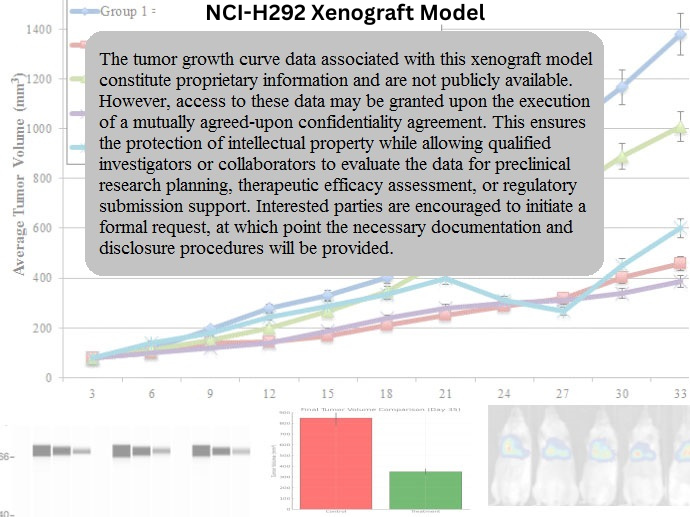
The NCI-H292 xenograft model is established via subcutaneous injection of cultured cells into immunocompromised mice, such as athymic nude or SCID strains. Tumors typically become palpable within 10–14 days and can reach volumes of 700–900 mm³ over 5 weeks. The model exhibits reliable tumorigenicity and homogeneous growth kinetics, making it suitable for pharmacokinetic/pharmacodynamic (PK/PD) correlation studies. Its secretory activity and stable engraftment allow researchers to examine the tumor microenvironment under chronic drug exposure or environmental stimulation, supporting its use in long-term preclinical evaluations.
Request a Custom Quote for NCI‑H292 Xenograft ModelHistopathology and Immunohistochemical Profile
Histologically, NCI-H292 xenografts display both squamous and glandular differentiation, consistent with their mucoepidermoid origin. Tumor sections reveal nests of cuboidal and polygonal cells with abundant cytoplasm, mucin production, and focal keratinization. Mucin presence can be confirmed through PAS staining, while immunohistochemistry demonstrates strong expression of cytokeratin 7, MUC5AC, and E-cadherin. Ki-67 indices are moderate, indicating controlled but steady proliferative potential. The absence of oncogenic EGFR or KRAS alterations is reflected in low baseline phosphorylated ERK and AKT activity, which increases upon stimulation, making this model ideal for inducible signaling studies.
Preclinical Applications and Drug Response
The NCI-H292 xenograft model is widely used to evaluate anti-mucin therapeutics, inflammation-targeted agents, and non-oncogene-addicted NSCLC treatments. Its wild-type EGFR and KRAS profile supports its use in resistance mechanism studies and testing of pathway-agnostic compounds such as corticosteroids, mucolytics, and JAK-STAT pathway inhibitors. It also provides a relevant system for assessing airway epithelial function in the context of cancer, including drug-induced modulation of mucus production. The model is increasingly employed in combination therapy trials where anti-inflammatory and anti-tumor mechanisms are jointly evaluated.
Request This Model
To incorporate the NCI-H292 xenograft model into your research on mucin-producing pulmonary carcinomas or inflammation-modulating therapeutics, contact our scientific support team for validated protocols, tumor kinetics data, and study design guidance tailored to this unique model system.
Request a Custom Quote for NCI‑H292 Xenograft Model