RCM1 Xenograft Model Overview
The RCM1 xenograft model is derived from a human colorectal carcinoma cell line originally isolated from a metastatic colon adenocarcinoma in a 68-year-old male patient. This model is highly relevant for preclinical studies focused on metastatic colorectal cancer, particularly in the context of tumor progression, metastasis, and resistance to standard chemotherapy. RCM1 xenografts are known for their robust tumorigenicity, with predictable growth kinetics and the ability to form secondary metastatic lesions, which makes them a valuable tool for evaluating the efficacy of both systemic and localized cancer therapies. Its well-differentiated epithelial characteristics, coupled with its aggressive metastasis, allow researchers to investigate a wide range of treatment regimens targeting primary tumors and metastatic sites.
Request a Custom Quote for RCM1 Xenograft ModelBiological and Molecular Characteristics
RCM1 cells exhibit an epithelial morphology and form tight cell monolayers in culture. The cell line is microsatellite stable (MSS) and retains wild-type KRAS, BRAF, and NRAS, making it an ideal candidate for testing therapies targeting upstream signaling pathways, particularly those focused on EGFR inhibition. TP53 is mutated in RCM1, which impairs apoptotic signaling and makes the model useful for studying DNA-damaging agents and strategies that exploit defective DNA repair mechanisms. RCM1 cells express moderate levels of carcinoembryonic antigen (CEA) and cytokeratin 20 (CK20), confirming their colorectal origin. The model’s stable molecular profile and preserved epithelial differentiation provide a reliable system for testing EGFR inhibitors, chemotherapy agents, and combination therapies aimed at overcoming chemotherapy resistance.
| Characteristic | RCM1 Cell Line Profile |
|---|---|
| Tissue of Origin | Colorectal adenocarcinoma (metastatic) |
| KRAS/BRAF/NRAS Status | Wild-type |
| TP53 Status | Mutated |
| MSI Status | Microsatellite stable (MSS) |
| Differentiation Markers | CK20, CEA, E-cadherin |
| Tumor Invasion/Metastasis | High metastatic potential |
In Vivo Model Development and Tumorigenicity
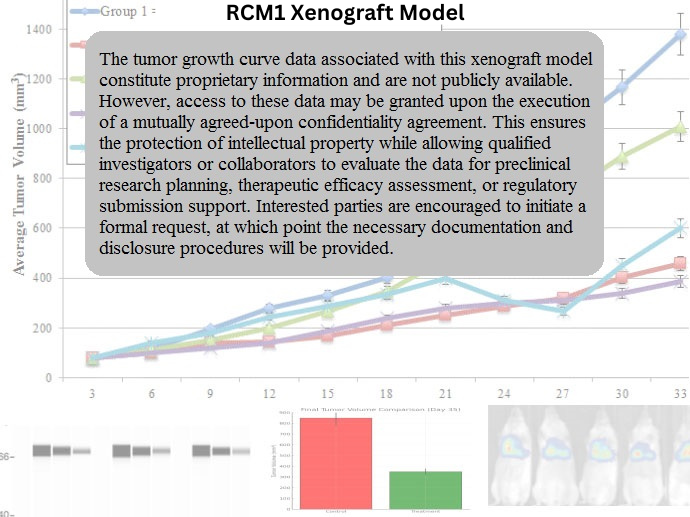
RCM1 xenografts are typically established by subcutaneous or orthotopic injection of cultured cells into immunodeficient mouse strains, such as athymic nude or NOD/SCID mice. Tumor engraftment occurs within 7 to 10 days post-implantation, with tumors reaching volumes of 700–900 mm³ within 3 to 4 weeks. The model exhibits rapid growth and aggressive metastasis, with a high rate of secondary tumor formation at distant sites, including the liver and lungs. RCM1 xenografts are particularly useful in studying metastatic processes, including epithelial-mesenchymal transition (EMT), tumor cell migration, and vascular invasion. The consistent tumor growth and ability to replicate metastasis make RCM1 a robust platform for evaluating both systemic and local therapies, including those aimed at inhibiting metastasis and targeting tumor vasculature.
Request a Custom Quote for RCM1 Xenograft ModelHistopathology and Immunohistochemical Profile
Histopathologically, RCM1-derived xenografts demonstrate moderately differentiated adenocarcinomas with characteristic glandular structures, tumor cell nests, and focal necrosis. Hematoxylin and eosin (H&E) staining highlights the presence of well-polarized epithelial cells with basally located nuclei. Immunohistochemistry confirms positive staining for CK20 and CEA, verifying the colorectal origin of the tumor cells. E-cadherin expression is present at cell–cell junctions, supporting the epithelial integrity of the tumors, while β-catenin is expressed at the membrane and in the cytoplasm, indicating active Wnt signaling. Mutant p53 is detectable in tumor nuclei, reflecting the loss of apoptotic function in the cells. The tumors’ ability to metastasize to distant sites such as the liver and lungs makes them an excellent model for studying the biology of metastatic colorectal cancer.
Preclinical Applications and Drug Response
The RCM1 xenograft model is highly relevant for evaluating therapeutic strategies targeting both primary colorectal tumors and metastatic disease. Given its wild-type KRAS/BRAF status, the model is responsive to EGFR inhibitors, such as cetuximab and panitumumab, and is commonly used in preclinical studies of combination therapies. Due to the presence of a TP53 mutation, RCM1 is also suitable for evaluating agents that target the DNA damage response or exploit synthetic lethality. The model’s high metastatic potential makes it ideal for studying the effects of drugs designed to inhibit tumor migration, invasion, and angiogenesis. In addition to traditional chemotherapy agents, RCM1 xenografts are widely used in immuno-oncology studies to evaluate immune checkpoint inhibitors, cancer vaccines, and other novel therapies aimed at enhancing anti-tumor immunity.
Request This Model
To incorporate the RCM1 xenograft model into your preclinical colorectal cancer research or drug development program, contact our scientific team for detailed model specifications and to discuss customized study designs tailored to your research objectives.
Request a Custom Quote for RCM1 Xenograft Model